from May. 1, 1865
The Apotheosis
-
Full Title
The Apotheosis
-
Description
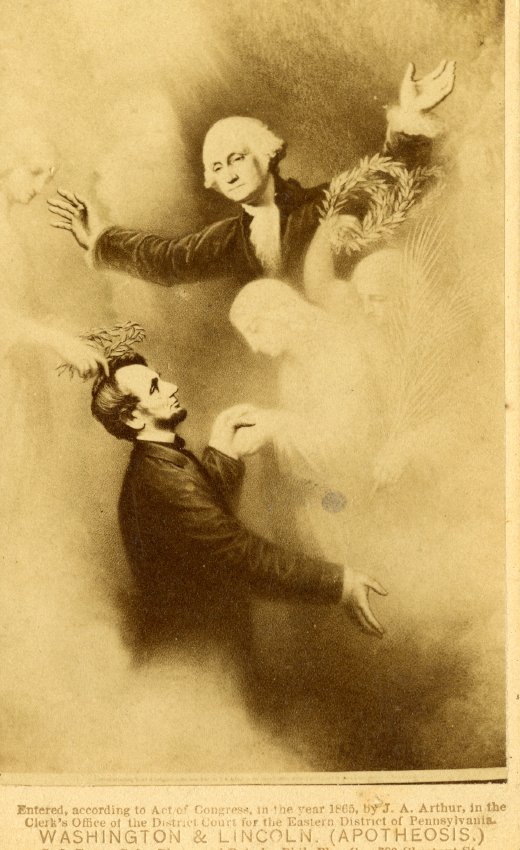
This memorial card bears an image of Lincoln being ushered into heaven by two angels, one of whom has taken him by the hand. A third angel's hand places a laurel wreath on Lincoln's head, and Washington is above Lincoln with outstretched arms. This is one of many such images popularized in the period shortly following Lincoln's assassination; Lincoln was often depicted meeting Washington in death and undergoing glorification.
-
Source
Abraham Lincoln Library and Museum of Lincoln Memorial University
-
Rights
Use of this item for research, teaching and private study is permitted with proper citation and attribution, as defined here. Reproduction of this item for publication, broadcast or commercial use requires written permission. For permission, please contact the Abraham Lincoln Library and Museum of Lincoln Memorial University, Harrogate, TN.
-
Tags
-
Cite this Item
S.J. Ferris, Del. Photo and Pub. by Phil. Pho. Co., 730 Chestnut St. "The Apotheosis ". Remembering Lincoln. Web. Accessed December 15, 2025. https://rememberinglincoln.fords.org/node/242
-
Creator
S.J. Ferris, Del. Photo and Pub. by Phil. Pho. Co., 730 Chestnut St
-
Date
1865
from May. 1, 1865
The Apotheosis
-
Description
This memorial card bears an image of Lincoln being ushered into heaven by two angels, one of whom has taken him by the hand. A third angel's hand places a laurel wreath on Lincoln's head, and Washington is above Lincoln with outstretched arms. This is one of many such images popularized in the period shortly following Lincoln's assassination; Lincoln was often depicted meeting Washington in death and undergoing glorification.
-
Source
Abraham Lincoln Library and Museum of Lincoln Memorial University
-
Rights
Use of this item for research, teaching and private study is permitted with proper citation and attribution, as defined here. Reproduction of this item for publication, broadcast or commercial use requires written permission. For permission, please contact the Abraham Lincoln Library and Museum of Lincoln Memorial University, Harrogate, TN.
-
Creator
S.J. Ferris, Del. Photo and Pub. by Phil. Pho. Co., 730 Chestnut St
-
Date
May 1, 1865
from May. 1, 1865
The Apotheosis
-
Full Title
The Apotheosis
-
Description
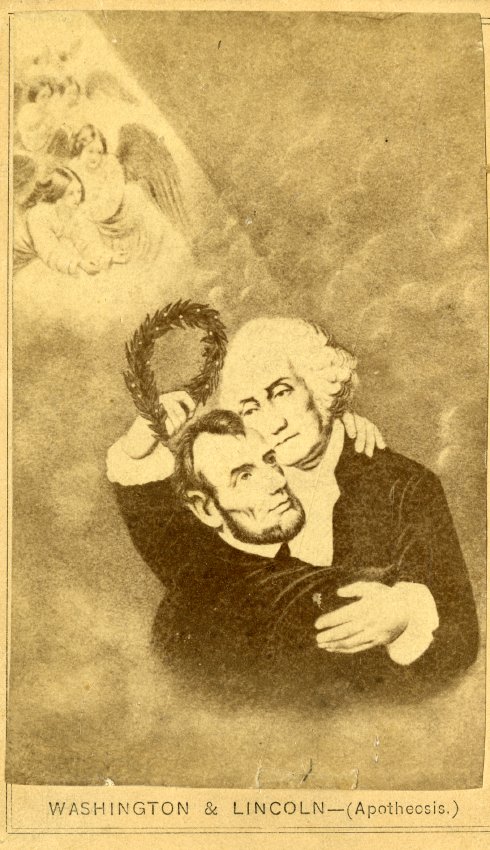
This carte-de-visite memorial card shows George Washington welcoming Lincoln into heaven with a laurel wreath. There is a shaft of light above the Presidents' heads with angels visible inside. The caption reads: "Washington & Lincoln-(Apotheosis.) Stamped on the back is the phrase: "Joseph Ward, Looking Glasses and Picture Frames 125 Washington St. Boston." The card was most likely produced in the period shortly following Lincoln's assassination.
-
Source
-
Rights
Use of this item for research, teaching and private study is permitted with proper citation and attribution, as defined here. Reproduction of this item for publication, broadcast or commercial use requires written permission. For permission, please contact the Abraham Lincoln Library and Museum of Lincoln Memorial University, Harrogate, TN.
-
Tags
-
Cite this Item
Joseph Ward, Looking Glasses and Picture Frames 125 Washington St. Boston. "The Apotheosis ". Remembering Lincoln. Web. Accessed December 15, 2025. https://rememberinglincoln.fords.org/node/240
-
Creator
Joseph Ward, Looking Glasses and Picture Frames 125 Washington St. Boston
-
Date
1865
from May. 1, 1865
The Apotheosis
-
Description
This carte-de-visite memorial card shows George Washington welcoming Lincoln into heaven with a laurel wreath. There is a shaft of light above the Presidents' heads with angels visible inside. The caption reads: "Washington & Lincoln-(Apotheosis.) Stamped on the back is the phrase: "Joseph Ward, Looking Glasses and Picture Frames 125 Washington St. Boston." The card was most likely produced in the period shortly following Lincoln's assassination.
-
Source
-
Rights
Use of this item for research, teaching and private study is permitted with proper citation and attribution, as defined here. Reproduction of this item for publication, broadcast or commercial use requires written permission. For permission, please contact the Abraham Lincoln Library and Museum of Lincoln Memorial University, Harrogate, TN.
-
Creator
Joseph Ward, Looking Glasses and Picture Frames 125 Washington St. Boston
-
Date
May 1, 1865
from Jun. 1, 1865
Mourning Badge
-
Full Title
Mourning Badge
-
Description
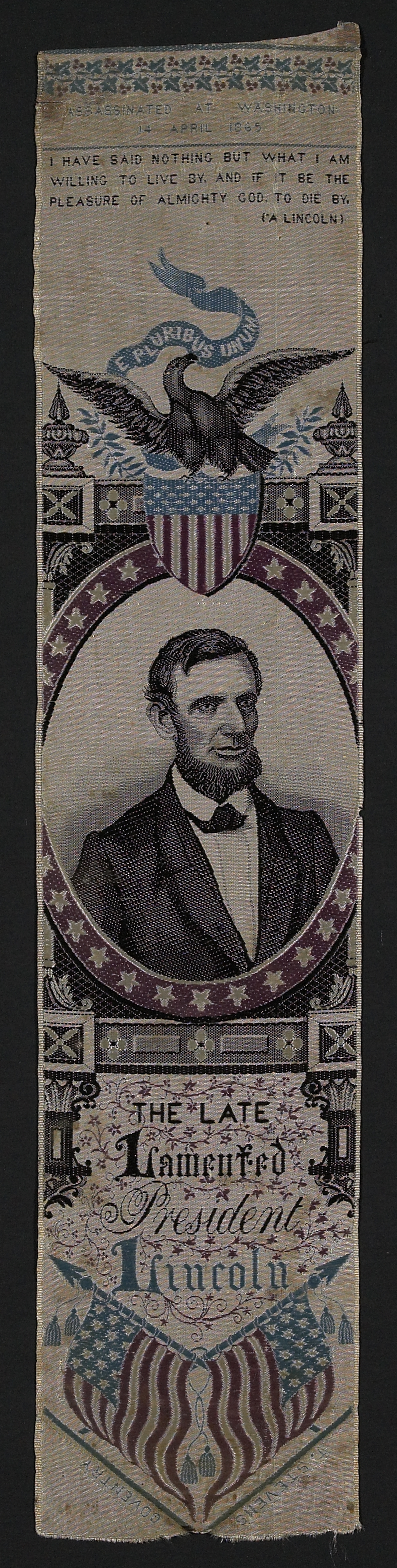
This mourning badge was created to commemorate Lincoln's death and was most likely worn in the period of national mourning following the assassination. It is rectangular in shape and tapers to a point at the bottom, with a blue tassel hanging from the end. The top features a blue floral design, underneath which are the words "Assassinated at Washington 14 April 1865," and Lincoln's words "I Have Said Nothing But What I Am Willing to Live by, and if it be the Pleasure to Almighty God, to Die By. (A. Lincoln." Underneath this quote is an eagle and shield design with an oval Lincoln portrait. At bottom are the words "The Late Lamented President Lincoln" in floral motif atop two crossed flags. The words "T. Steven Coventry" appear on the back, and it is likely that this is the maker.
-
Source
Abraham Lincoln Library and Museum of Lincoln Memorial University
-
Rights
Use of this item for research, teaching and private study is permitted with proper citation and attribution, as defined here. Reproduction of this item for publication, broadcast or commercial use requires written permission. For permission, please contact the Abraham Lincoln Library and Museum of Lincoln Memorial University, Harrogate, TN.
-
Tags
-
Cite this Item
T. Steven Coventry. "Mourning Badge ". Remembering Lincoln. Web. Accessed December 15, 2025. https://rememberinglincoln.fords.org/node/239
-
Creator
T. Steven Coventry
-
Date
1865
from Jun. 1, 1865
Mourning Badge
-
Description
This mourning badge was created to commemorate Lincoln's death and was most likely worn in the period of national mourning following the assassination. It is rectangular in shape and tapers to a point at the bottom, with a blue tassel hanging from the end. The top features a blue floral design, underneath which are the words "Assassinated at Washington 14 April 1865," and Lincoln's words "I Have Said Nothing But What I Am Willing to Live by, and if it be the Pleasure to Almighty God, to Die By. (A. Lincoln." Underneath this quote is an eagle and shield design with an oval Lincoln portrait. At bottom are the words "The Late Lamented President Lincoln" in floral motif atop two crossed flags. The words "T. Steven Coventry" appear on the back, and it is likely that this is the maker.
-
Source
Abraham Lincoln Library and Museum of Lincoln Memorial University
-
Rights
Use of this item for research, teaching and private study is permitted with proper citation and attribution, as defined here. Reproduction of this item for publication, broadcast or commercial use requires written permission. For permission, please contact the Abraham Lincoln Library and Museum of Lincoln Memorial University, Harrogate, TN.
-
Creator
T. Steven Coventry
-
Date
June 1, 1865
from May. 1, 1865
Assassination Event
-
Full Title
Assassination Event
-
Description
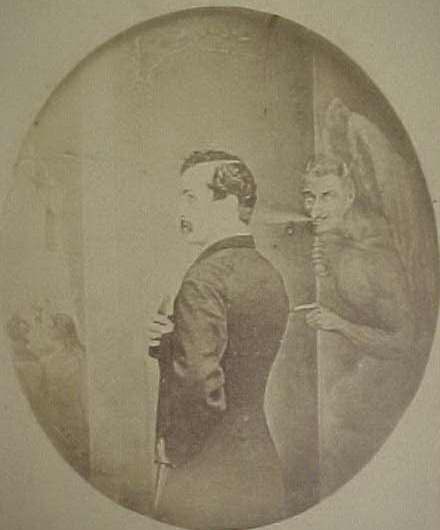
Carte-de-visite showing an armed Booth standing outside the Presidential Box at Ford's Theater. The devil is standing behind and to Booth's side, whispering into his ear. The box's occupants are visible beyond Booth's other side. Below the overlapped image is the legend, "John Wilkes Booth. The Assassin."
-
Source
-
Rights
Use of this item for research, teaching and private study is permitted with proper citation and attribution, as defined here. Reproduction of this item for publication, broadcast or commercial use requires written permission. For permission, please contact the Abraham Lincoln Library and Museum of Lincoln Memorial University, Harrogate, TN.
-
Tags
-
Cite this Item
anonymous. "Assassination Event ". Remembering Lincoln. Web. Accessed December 15, 2025. https://rememberinglincoln.fords.org/node/238
-
Creator
anonymous
-
Date
1865
-
Dimensions
4 inches high by 2 1/2 inches wide
from May. 1, 1865
Assassination Event
-
Description
Carte-de-visite showing an armed Booth standing outside the Presidential Box at Ford's Theater. The devil is standing behind and to Booth's side, whispering into his ear. The box's occupants are visible beyond Booth's other side. Below the overlapped image is the legend, "John Wilkes Booth. The Assassin."
-
Source
-
Rights
Use of this item for research, teaching and private study is permitted with proper citation and attribution, as defined here. Reproduction of this item for publication, broadcast or commercial use requires written permission. For permission, please contact the Abraham Lincoln Library and Museum of Lincoln Memorial University, Harrogate, TN.
-
Creator
anonymous
-
Date
May 1, 1865
-
Dimensions
4 inches high by 2 1/2 inches wide
from May. 1, 1865
Children's Block Set
-
Full Title
Parlor Monuments, to the Illustrious Dead
-
Description
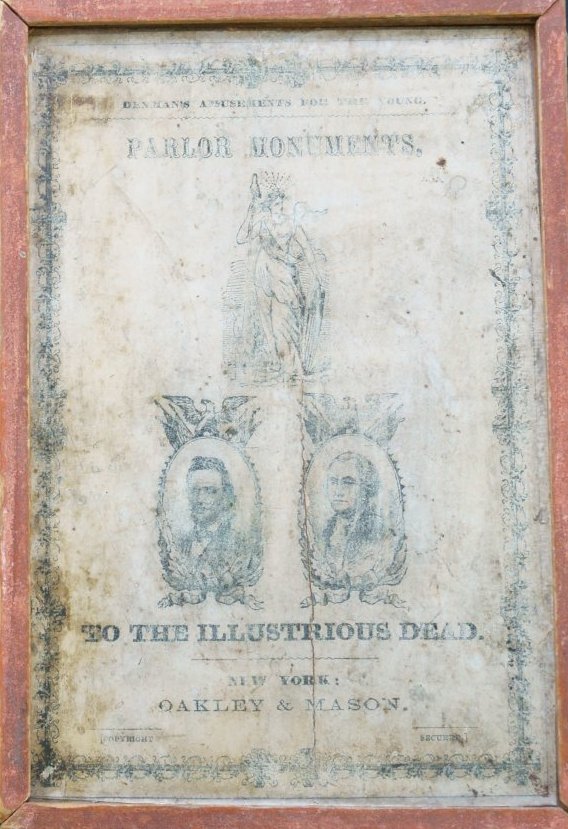
This child's block set was most likely produced in August 1865 and was manufactured by the firm of Oakley and Mason of New York. The storage box is made of wood, is painted green, and has a sliding cover decorated with a lithograph image of Justice above a pair of oval portraits of Lincoln and George Washington. The set contains 24 wooden blocks decorated with patriotic images and words. The blocks can be assembled into three different "monuments" using an accompanying guide-sheet: the Children's Monument to Abraham Lincoln, the Freedman's Monument to Abraham Lincoln, and the National Monument to Abraham Lincoln. Each block is 2.25 inches high, 1 inch wide, and 1 inch deep. Only two sets are known to exist anywhere, and it is likely that only a small number were made. Copyright searches in New York for the period 1865-1880 have not revealed any information on this item.
-
Source
-
Rights
Use of this item for research, teaching and private study is permitted with proper citation and attribution, as defined here. Reproduction of this item for publication, broadcast or commercial use requires written permission. For permission, please contact the Abraham Lincoln Library and Museum of Lincoln Memorial University, Harrogate, TN.
-
Tags
-
Cite this Item
Manufactured by the firm of Oakley and Mason of New York. "Parlor Monuments, to the Illustrious Dead". Remembering Lincoln. Web. Accessed December 15, 2025. https://rememberinglincoln.fords.org/node/228
-
Creator
Manufactured by the firm of Oakley and Mason of New York
-
Date
1865
from May. 1, 1865
Parlor Monuments, to the Illustrious Dead
-
Description
This child's block set was most likely produced in August 1865 and was manufactured by the firm of Oakley and Mason of New York. The storage box is made of wood, is painted green, and has a sliding cover decorated with a lithograph image of Justice above a pair of oval portraits of Lincoln and George Washington. The set contains 24 wooden blocks decorated with patriotic images and words. The blocks can be assembled into three different "monuments" using an accompanying guide-sheet: the Children's Monument to Abraham Lincoln, the Freedman's Monument to Abraham Lincoln, and the National Monument to Abraham Lincoln. Each block is 2.25 inches high, 1 inch wide, and 1 inch deep. Only two sets are known to exist anywhere, and it is likely that only a small number were made. Copyright searches in New York for the period 1865-1880 have not revealed any information on this item.
-
Source
-
Rights
Use of this item for research, teaching and private study is permitted with proper citation and attribution, as defined here. Reproduction of this item for publication, broadcast or commercial use requires written permission. For permission, please contact the Abraham Lincoln Library and Museum of Lincoln Memorial University, Harrogate, TN.
-
Creator
Manufactured by the firm of Oakley and Mason of New York
-
Date
May 1, 1865
from Apr. 15, 1865
Gardiner, Maine, Broadside
-
Full Title
Mayor's Office, April 15th, 1865 Whereas, We are informed of the death of Abraham Lincoln.
-
Description
This broadside distributed by the Mayor of Gardiner, Maine, (N. O. Mitchell) focuses on the death of President Lincoln. The broadside asks citizens of the town to gather at their places of worship on April 16, 1865, and pray to God, "imploring his Divine assistance at this time of our great country's peril."
-
Source
Bdses 1865 Apr. 15; Massachusetts Historical Society
-
Rights
Use of this item for research, teaching, and private study is permitted with proper citation and attribution, as: From the Collection of the Massachusetts Historical Society. Reproduction of this item for publication, broadcast, or commercial use requires written permission. For permission, please see this web page.
-
Tags
-
Cite this Item
Gardiner (Me.). Mayor.. "Mayor's Office, April 15th, 1865 Whereas, We are informed of the death of Abraham Lincoln.". [Gardiner, ME.: s.n., 1865]. Remembering Lincoln. Web. Accessed December 15, 2025. https://rememberinglincoln.fords.org/node/227
-
Creator
Gardiner (Me.). Mayor.
-
Publisher
[Gardiner, ME.: s.n., 1865]
-
Date
April 15, 1865
from Apr. 15, 1865
Mayor's Office, April 15th, 1865 Whereas, We are informed of the death of Abraham Lincoln.

-
Description
This broadside distributed by the Mayor of Gardiner, Maine, (N. O. Mitchell) focuses on the death of President Lincoln. The broadside asks citizens of the town to gather at their places of worship on April 16, 1865, and pray to God, "imploring his Divine assistance at this time of our great country's peril."
-
Source
Bdses 1865 Apr. 15; Massachusetts Historical Society
-
Rights
Use of this item for research, teaching, and private study is permitted with proper citation and attribution, as: From the Collection of the Massachusetts Historical Society. Reproduction of this item for publication, broadcast, or commercial use requires written permission. For permission, please see this web page.
-
Creator
Gardiner (Me.). Mayor.
-
Publisher
[Gardiner, ME.: s.n., 1865]
-
Date
April 15, 1865
from Apr. 29, 1865
"The Sad Rites of Yesterday"
-
Full Title
The Sad Rites of Yesterday
-
Description
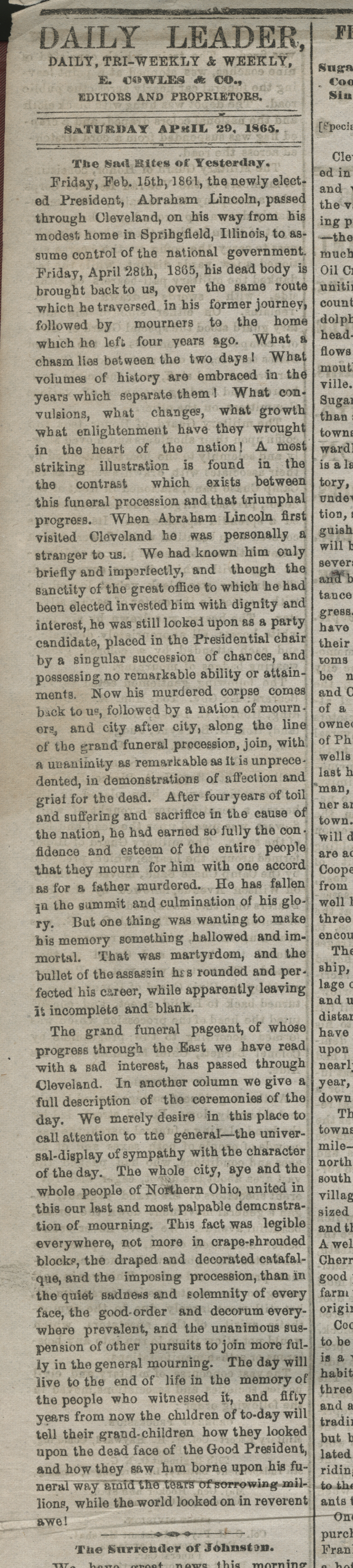
The Cleveland Morning Leader newspaper issued this editorial in its April 29, 1865 edition, the day after Lincoln's funeral train had stopped in the city and the body of the slain President was on display for the citizens of the city and surrounding towns to view the President and pay their respect. The editorial paints a clear picture of the mood of the citizenry of one of the Northern states after losing the man who guided the nation through the trauma of the Civil War. Lincoln had won the Presidency with the strong support of Cleveland and the State of Ohio both in 1860 and again in 1864. Cleveland was the largest city in the old Western Reserve area of Ohio, with strong abolitionist feelings dating back to the ordinances of the old Northwest Territory that prohibited slavery. The new Republican Party was especially strong in Cleveland.
-
Transcription
The Sad Rites of Yesterday
Friday, Feb. 15th, 1861, the newly elected President, Abraham Lincoln, passed through Cleveland, on his way from his modest home in Springfield, Illinois, to assume control of the national government. Friday, April 28th, 1865, his dead body is brought back to us, over the same route which he traversed in his former journey, followed by mourners to the home which he left four years ago. What a chasm lies between two days! What volumes of history are embraced in the years which seperate them! What convulsions, what changes, what growth, what enlightenment have they wrought in the heart of the nation! A most striking illustration is found in the contrast which exists between this funeral procession and the triumphal progress. When Abraham Lincoln first visited Cleveland he was personally a stranger to us. We had known him only briefly and imperfectly, and though the sanctity of the great office to which he had been elected invested him with dignity and interest, he was still looked upon as a party candidate, place in the Presidential chair by a singular succession of chances, and possessing no remarkable ability or attainments. Now his murdered corpse comes back to us, followed by a nation of mourners, and city after city, along the line of the grand funeral procession, join, with a unanimity as remarkable as it is unprecedented, in demonstrations of affection and grief for the dead. After four years of toil and suffering and sacrifice in the cause of the nation, he had earned so fully the confidence and esteem of the entire people that they mourn for him with one accord as for a father murdered. He has fallen in the summit and culmination of his glory. But one thing was wanting to make his memory something hallowed and immortal. That was martyrdom, and the bullet of the assassin has rounded and perfected his career, while apparently leaving it incomplete and blank.
The grand funeral pageant, of whose progress through the East we have read with a sad interest, has passed through Cleveland. In another column we give a full description of the ceremonies of the day. We merely desire in this place to call attention to the general - the universal-display of sympathy with the character of the day. The whole city, aye and the whole people of Northern Ohio, united in this our last and most palpable demonstration of mourning. This fact was legible everywhere, not more in crape-shrouded blocks, the draped and decorated catafalque, and the imposing procession, than in the quiet sadness and solemnity of every face, the good-order and decorum everywhere prevalent, and the unanimous suspension of other pursuits to join more fully in the general mourning. The day will live to the end of life in the memory of the people who witnessed it, and fifty years from now the children of today will tell their grandchildren how they looked upon the dead face of the Good President, and how they saw him borne upon his funeral way amid the tears of sorrowing millions, while the world looked on in reverent awe!
-
Source
www.wrhs.org
-
Rights
Permission for personal or research use; publication or reproduction requires written permission from the Western Reserve Historical Society.
-
Tags
-
Cite this Item
Cleveland Morning Leader. "The Sad Rites of Yesterday". Cleveland Morning Leader. Remembering Lincoln. Web. Accessed December 15, 2025. https://rememberinglincoln.fords.org/node/226
-
Creator
Cleveland Morning Leader
-
Publisher
Cleveland Morning Leader
-
Date
April 29, 1865
from Apr. 29, 1865
The Sad Rites of Yesterday
-
Description
The Cleveland Morning Leader newspaper issued this editorial in its April 29, 1865 edition, the day after Lincoln's funeral train had stopped in the city and the body of the slain President was on display for the citizens of the city and surrounding towns to view the President and pay their respect. The editorial paints a clear picture of the mood of the citizenry of one of the Northern states after losing the man who guided the nation through the trauma of the Civil War. Lincoln had won the Presidency with the strong support of Cleveland and the State of Ohio both in 1860 and again in 1864. Cleveland was the largest city in the old Western Reserve area of Ohio, with strong abolitionist feelings dating back to the ordinances of the old Northwest Territory that prohibited slavery. The new Republican Party was especially strong in Cleveland.
-
Source
www.wrhs.org
-
Rights
Permission for personal or research use; publication or reproduction requires written permission from the Western Reserve Historical Society.
-
Creator
Cleveland Morning Leader
-
Publisher
Cleveland Morning Leader
-
Date
April 29, 1865
from Apr. 28, 1865
"The Face of the Dead"
-
Full Title
The Face of the Dead
-
Description
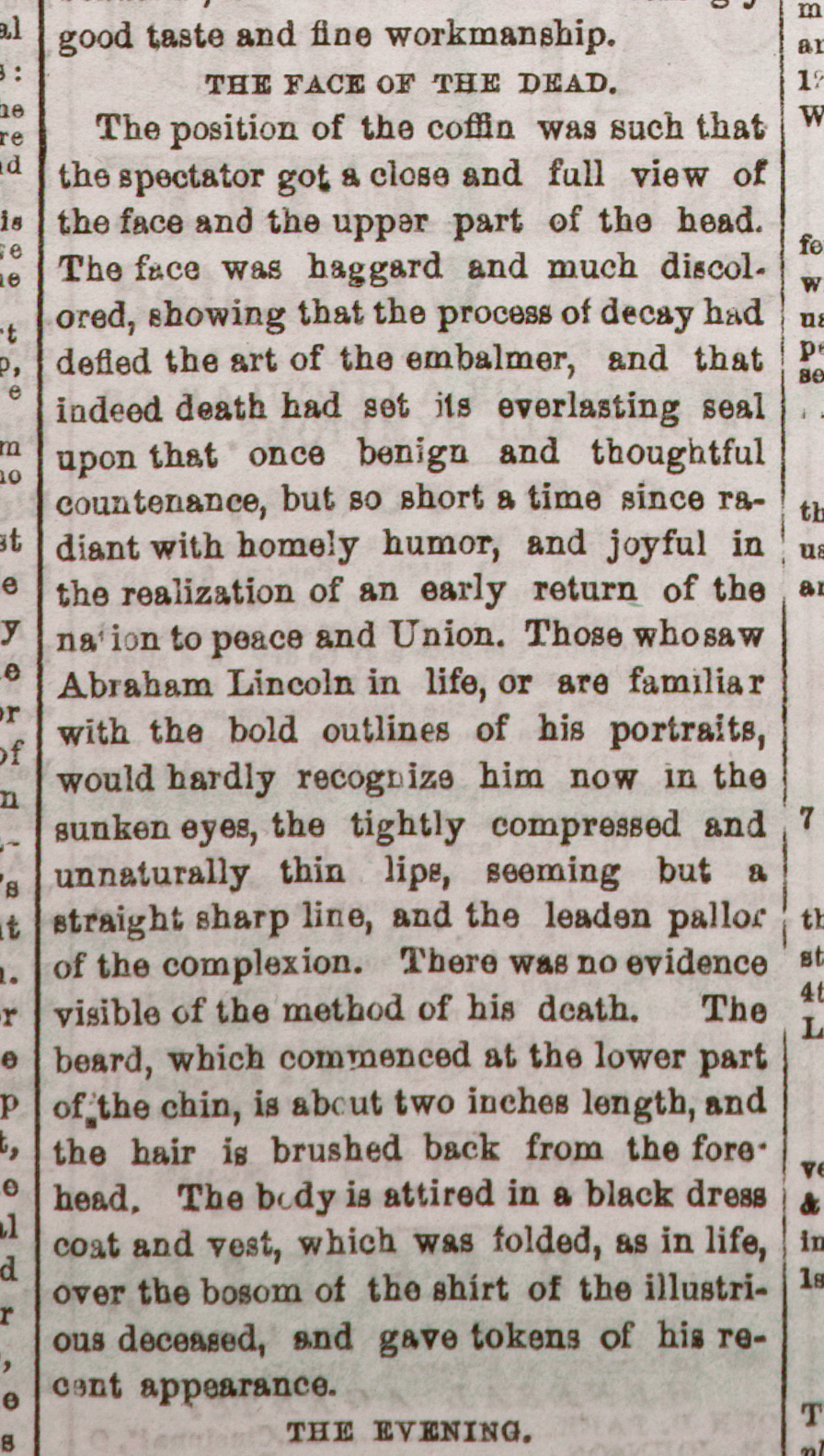
Lincoln was the first President of the United States to be embalmed. His funeral and viewing was done with an open casket, so that in Washington, D.C., and at other stops along the route of the funeral train, citizens could view his body. the funeral train stopped in Cleveland, Ohio on April 28, two weeks after the assassination, where for the first time the casket and catafalque were displayed outdoors. Over 60,000 citizens were reported to have viewed the body during that single day. The next day the Cleveland Morning Leader newspaper reported on the funeral events, including this short article about the countenance of the face of the President. While there are many photographs of the catafalque on display in Cleveland's Public Square, no photographs of Lincoln's body were allowed, so that this direct report provides what we know of how he looked two weeks after his death.
-
Source
www.wrhs.org
-
Rights
Permission for personal or research use; publication or reproduction requires written permission of the Western Reserve Historical Society.
-
Tags
-
Cite this Item
Cleveland Morning Leader newspaper. "The Face of the Dead". Remembering Lincoln. Web. Accessed December 15, 2025. https://rememberinglincoln.fords.org/node/225
-
Creator
Cleveland Morning Leader newspaper
-
Date
April 28, 1865
from Apr. 28, 1865
The Face of the Dead
-
Description
Lincoln was the first President of the United States to be embalmed. His funeral and viewing was done with an open casket, so that in Washington, D.C., and at other stops along the route of the funeral train, citizens could view his body. the funeral train stopped in Cleveland, Ohio on April 28, two weeks after the assassination, where for the first time the casket and catafalque were displayed outdoors. Over 60,000 citizens were reported to have viewed the body during that single day. The next day the Cleveland Morning Leader newspaper reported on the funeral events, including this short article about the countenance of the face of the President. While there are many photographs of the catafalque on display in Cleveland's Public Square, no photographs of Lincoln's body were allowed, so that this direct report provides what we know of how he looked two weeks after his death.
-
Source
www.wrhs.org
-
Rights
Permission for personal or research use; publication or reproduction requires written permission of the Western Reserve Historical Society.
-
Creator
Cleveland Morning Leader newspaper
-
Date
April 28, 1865
from Apr. 15, 1865
Cornerstone of Third Cuyahoga County Courthouse
-
Full Title
Cornerstone of Third County Courthouse, Cuyahoga County, Cleveland, Ohio
-
Description
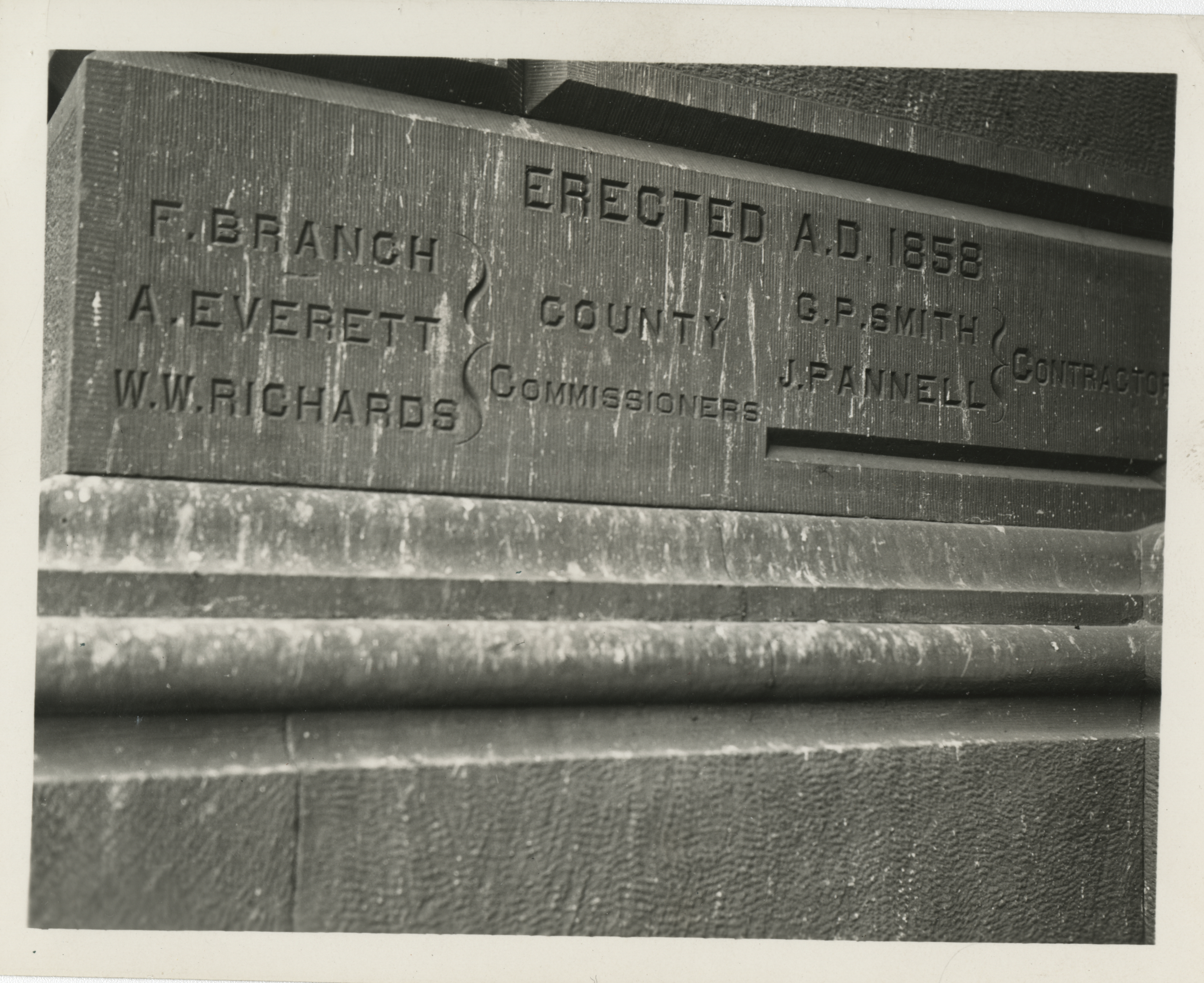
On April 15, 1865 citizens of Cleveland, Ohio, gathered on Public Square to mourn the death of Lincoln by assassination. The architect for the nearby Cuyahoga County Courthouse, J. J. Husband, was heard to say that Lincoln's death was "no great loss." The crowd turned on him, chasing him back to his office, also nearby, and he later that day fled Cleveland for good. Several members of the crowd went to the courthouse, then on the NW corner of Public Square, and chiseled out his name, vowing that his name would never be spoken or read in Cleveland ever after. See "Traitors at Home," a news article appearing the following Monday in the Cleveland Morning Leader, also uploaded to this Remembering Lincoln archive. Shown here is the cornerstone as it appeared in 1930s, when the building was demolished.
-
Source
-
Rights
Permission for personal or research use; publication or reproduction requires written permission from the Western Reserve Historical Society.
-
Tags
-
Cite this Item
Western Reserve Historical Society. "Cornerstone of Third County Courthouse, Cuyahoga County, Cleveland, Ohio". Remembering Lincoln. Web. Accessed December 15, 2025. https://rememberinglincoln.fords.org/node/224
-
Creator
Western Reserve Historical Society
-
Date
April 15, 1865
from Apr. 15, 1865
Cornerstone of Third County Courthouse, Cuyahoga County, Cleveland, Ohio
-
Description
On April 15, 1865 citizens of Cleveland, Ohio, gathered on Public Square to mourn the death of Lincoln by assassination. The architect for the nearby Cuyahoga County Courthouse, J. J. Husband, was heard to say that Lincoln's death was "no great loss." The crowd turned on him, chasing him back to his office, also nearby, and he later that day fled Cleveland for good. Several members of the crowd went to the courthouse, then on the NW corner of Public Square, and chiseled out his name, vowing that his name would never be spoken or read in Cleveland ever after. See "Traitors at Home," a news article appearing the following Monday in the Cleveland Morning Leader, also uploaded to this Remembering Lincoln archive. Shown here is the cornerstone as it appeared in 1930s, when the building was demolished.
-
Source
-
Rights
Permission for personal or research use; publication or reproduction requires written permission from the Western Reserve Historical Society.
-
Creator
Western Reserve Historical Society
-
Date
April 15, 1865
from Apr. 28, 1865
The Old Nashville
-
Full Title
The Old Nashville / The Engine that Drew Lincoln's Funeral Train from Washington, D.C. to Springfield, ILL.
-
Description
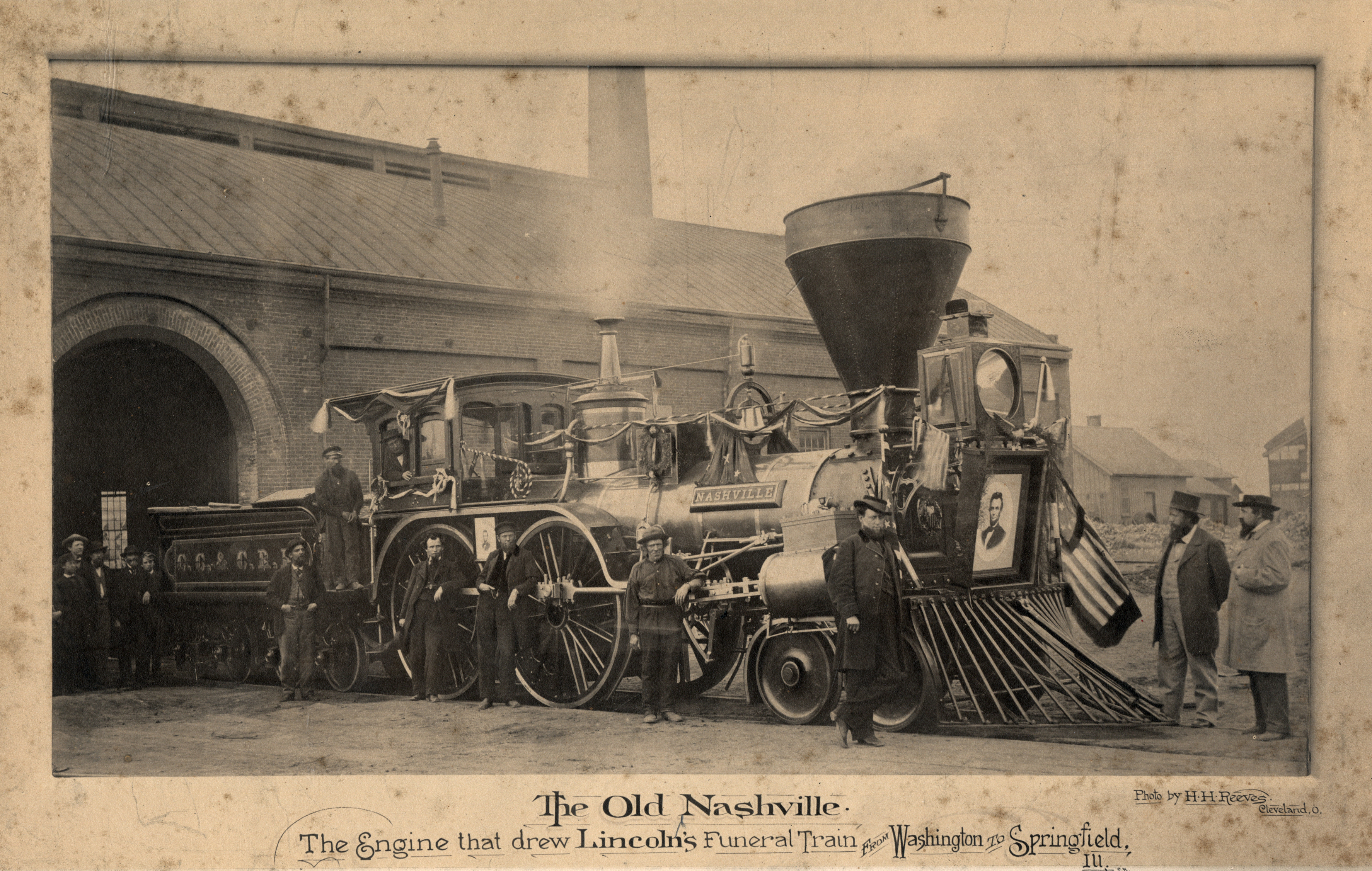
View of steam locomotive "Old Nashville" at the Willson Street Station in Cleveland, Ohio, April 28, 1865. This was just one of many locomotives used by various railroad to pull the Lincoln funeral train. This locomotive was owned by the Cleveland, Columbus, and Cincinnati Railroad and pulled the funeral train from Cleveland to Columbus. This photograph is the best image of any of the various funeral train locomotives and so all models of the "official" Lincoln funeral train rely on this engine.
-
Source
www.wrhs.org
-
Rights
Permission for personal or research use; publication or reproduction requires written permission of the Western Reserve Historical Society.
-
Tags
-
Cite this Item
H.H. Reeves of Cleveland, O.. "The Old Nashville / The Engine that Drew Lincoln's Funeral Train from Washington, D.C. to Springfield, ILL.". Remembering Lincoln. Web. Accessed December 15, 2025. https://rememberinglincoln.fords.org/node/222
-
Creator
H.H. Reeves of Cleveland, O.
-
Date
April 28, 1865
from Apr. 28, 1865
The Old Nashville / The Engine that Drew Lincoln's Funeral Train from Washington, D.C. to Springfield, ILL.
-
Description
View of steam locomotive "Old Nashville" at the Willson Street Station in Cleveland, Ohio, April 28, 1865. This was just one of many locomotives used by various railroad to pull the Lincoln funeral train. This locomotive was owned by the Cleveland, Columbus, and Cincinnati Railroad and pulled the funeral train from Cleveland to Columbus. This photograph is the best image of any of the various funeral train locomotives and so all models of the "official" Lincoln funeral train rely on this engine.
-
Source
www.wrhs.org
-
Rights
Permission for personal or research use; publication or reproduction requires written permission of the Western Reserve Historical Society.
-
Creator
H.H. Reeves of Cleveland, O.
-
Date
April 28, 1865