from May. 1, 1865
Dr. Charles A. Leale
-
Full Title
Dr. Charles A. Leale
-
Transcription
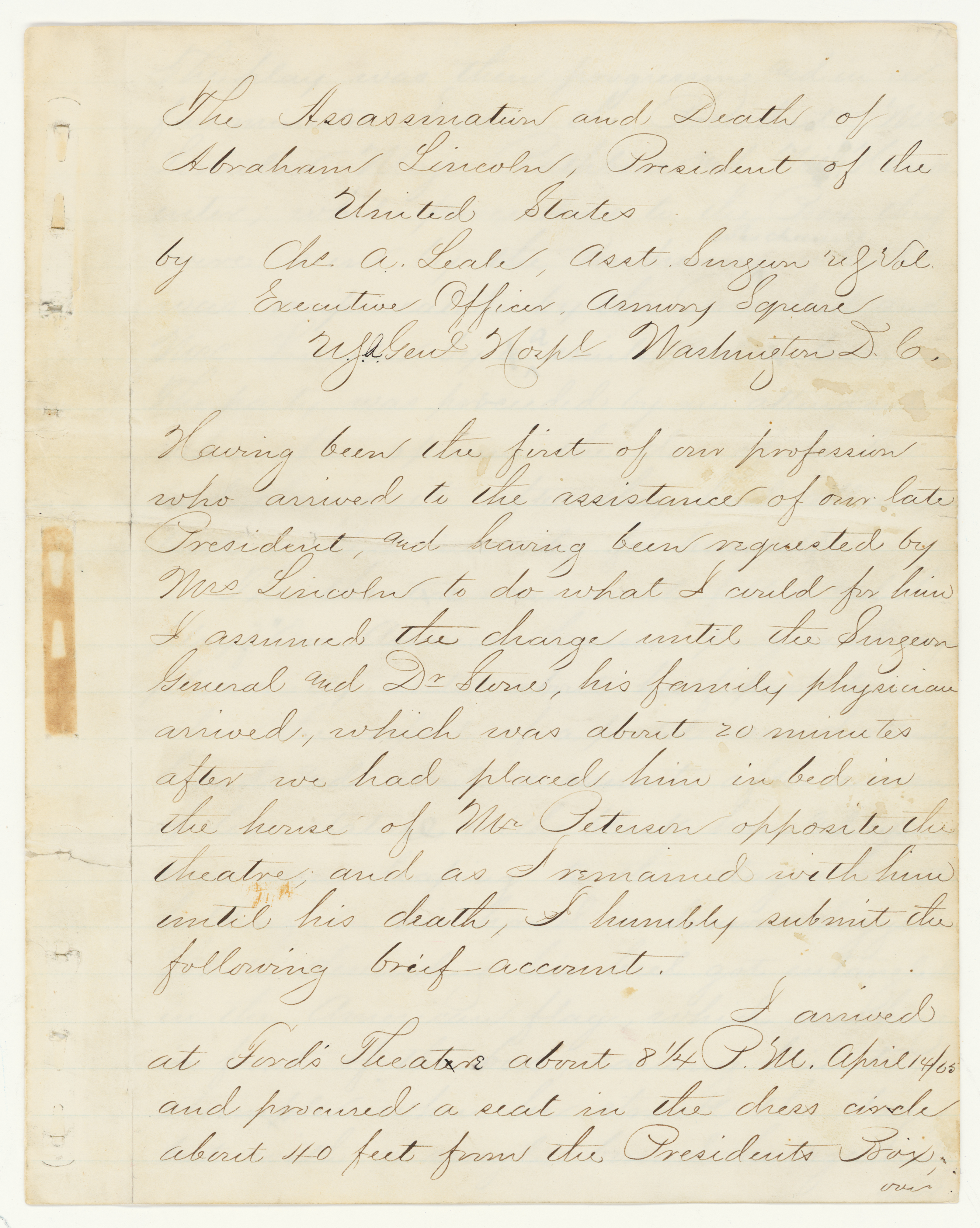
The Assassination and Death of Abraham Lincoln, President of the United States
by Chl. A. Leale, Asst. Surgeon US Vol. Executive Officer, Armory Square U.S.A. Hosp[ita]l. Washington D. C.
Having been the first of our profession who arrived to the assistance of our late President, and having been requested by Mrs. Lincoln to do what I could for him I assumed the charge until the Surgeon General and Dr. Stone, his family physician arrived, which was about 20 minutes after we had placed him in bed in the house of Mr. Peterson opposite the theatre, and as I remained with him until his death, I humbly submit the following brief account.
I arrived at Ford's Theatre about 8 1/2 P.M. April 14/65 and procured a seat in the dress circle about 40 feet from the Presidents Box. The play was then progressing and in a few minutes I saw the President, Mrs. Lincoln, Major Rathbone and Miss Harris enter; while proceeding to the Box they were seen by the audience, ^[insert] who cheered [/insert] which was reciprocated by the President and Mrs. Lincoln by a smile and [strikethrough] a [/strikethrough] bow. The party was proceeded by an attendant who ofter opening the door of the box and closing it after they had all entered took a seat near by for himself.
The theatre was well filled and the play of "Our American Cousin" progressed very pleasantly until about half past ten, when the report of a pistol was distinctly heard and about a minute after a man of low stature with black hair and eyes, was seen leaping to the stage, beneath holding in his hand a drawn dagger. While descending his heel got entangled in the American flag, which was hung in front of the box, causing him to stumble when he struck the stage, but with a single bound he regained the use of his limbs and ran to the opposite ^[insert] side [/insert] of the stage, flourishing ^[insert] in his hand a drawn [/insert] [strikethrough] his [/strikethrough] dagger and disappearing behind the scene. I then heard cries that the "President has been murdered", which were followed by those of "Kill the murderer", "Shoot him" etc. which came from different parts of the audience. I immediately ran to the President's box and as soon as the door was opened was admitted and introduced to Mrs. Lincoln, where she exclaimed several times "O Doctor, do what you can for him, do what you can"! I told her we would do all ^[insert] that [/insert] we possibly could.
When I entered the box the ladies were very much excited. Mr. Lincoln was seated in a high backed arm-chair with his head leaning towards his right side supported by Mrs. Lincoln, who was weeping bitterly. Miss Harris was near her left and behind the President.
While approaching the President I sent a gentleman for brandy and another for water. When I reached the President he was in a state of general paralysis, his eyes were closed and he was in a profoundly comatose condition, while his breathing was intermittent and exceedingly stertorous. I placed my finger on his right radial pulse but could perceive no movement of the artery.
As two gentlemen now arrived, I requested them to assist me to place him in a recumbent position, and as I held his head and shoulders, while doing this my hand came in contact with a clot of blood near his left shoulder. Supposing that he had been stabbed there I asked a gentleman to cut his coat and shirt off from that part, to enable me if possible to check the haemorrhage, which I supposed took place from the subclavian artery or some of its branches.
Before they had proceeded as far as the elbow I commenced to examine his head (as no wound near the shoulder was found) and soon passed my finger over a large firm clot of blood, situated about one inch below the superior curved line of the occipital bone and an inch and a half to the left of the median line of the same bone. The coagula I easily removed and passed the little finger of my left hand through the perfectly smooth opening made by the ball and found that it had entered the encephalon. As soon as I removed my finger a slight oozing of blood followed and his breathing became more regular and less stertorous. The brandy and water now arrived and a small quantity was placed in his mouth, which passed into his stomach where it was retained.
Dr. C. S. Taft and Dr. A. F. A. King now arrived and after a moments consultation we agreed to have him removed to the nearest house, which we immediately did, the above named with others assisting. When we arrived at the door of the box, the passage was found to be densely crowded by those who were rushing toward that part of the theatre. I called out twice "Guards clear the passage," which was so soon done that we proceeded without a moments delay with the President and were not in the slightest interrupted until he was placed in bed in the house of Mr. Peterson, opposite the theatre, in less than 20 minutes from the time that he was assassinated. The street in front of the theatre before we had left it was filled with the excited populace, a large number of whom followed us into the house. As soon as we arrived in the room offered to us, we placed the President in bed in a diagonal position; as the bed was too short a part of the foot was removed to enable us to place him in a comfortable position. The windows were opened and at my request a Captain, present made all leave the room except the medical gentlemen and friends. As soon as we placed him in bed we removed his clothes and covered him with blankets. While covering him I found his lower extremities of the ecchymosis until it encircled the orbit extending above the supra orbital ridge and below the infra orbital foramen. The wound was kept open by the Surgeon General by means of ^[insert] a [/insert] silver probe, and as the President was placed diagonally on the bed, his head was supported in its position by Surgeon Crane and Dr. Taft ^[insert] (relieving each other) [/insert]
About 2 A. M. the Hospital Steward, who had been sent for a Nelatons probe, arrived and an examination was made by the Surgeon General, who introduced it to a distance of about 2 1/2 inches, when it came into contact with a foreign substance, which laid across the track of the ball. This being easily passed the probe was introduced several inches further, where it again touched a hard substance, which was at first supposed to be the ball, but as the bulb of the probe on its withdrawal did not indicate the mark of lead, it was generally thought to be another piece of loose bone. The probe was introduced a second time and the ball was supposed to be distinctly felt by the Surgeon General, Surgeon Crane and Dr. Stone. After this second exploration nothing further was done with the wound except to keep the opening free from cogula, which if allowed to form and remain for a very short time, would produce signs of increased compression; the breathing becoming profoundly stertorous and intermittent and the pulse to be more feeble and irregular. His pulse which was several times counted by Dr. Ford and noted by Dr. King, ranged until 12 P. M. from between 40 to 64 beats per minutes, and his respiration about 24 per minute, were loud and stertorous. At 1 A. M. his pulse suddenly increased in frequency to 100 per minute, but soon diminished gradually becoming less feeble until 2:54 A. M. when it was 48 and hardly perceptible. At 6:40 A. M. ^[insert] his [/insert] pulse could not be counted, it being very intermittent, two or three pulsations being felt and followed by an intermission, when not the slightest movement of the artery could be felt. The inspirations now became very short and the expirations very prolonged and labored accompanied by a guttural sound. 6.50 A.M. The respirations cease for some time and all eagerly look at their watches until the profound silence is disturbed by a prolonged inspiration which was soon followed by a sonorous expiration. The Surgeon General now held his finger to the carotid artery, Col. Crane held his head, Dr. Stone, who was sitting on the bed, held his left pulse, and his right pulse was held by myself. At 7.20 A.M. he breathed his last and "the spirit fled to God who gave it."
During the course of the night the room was visited by many of his friends. Mrs. Lincoln with Mrs. Senator Dixon came into the room three of four times during the night. The Presidents son, Captn R. Lincoln, remained with his father during the greater part of the night. Immediately after death had taken place, we all bowed and the Rev Dr. Gurley supplicated to God in behalf of the bereaved family and our afflicted country.
[Stamped: The National Archives of The United States] [Right Margin Vertical Text: D No 776]
True Copy
Chas. A. Leale M.D. -
Source
-
Rights
This item is in the public domain and may be reproduced and used for any purpose, including research, teaching, private study, publication, broadcast or commercial use, with proper citation and attribution.
-
Tags
-
Cite this Item
National Archives. "Dr. Charles A. Leale". War Department. The Adjutant General's Office. Remembering Lincoln. Web. Accessed June 22, 2026. https://rememberinglincoln.fords.org/node/1197
-
Creator
National Archives
-
Publisher
War Department. The Adjutant General's Office
-
Date
1865
from May. 1, 1865
Dr. Charles A. Leale
-
Source
-
Rights
This item is in the public domain and may be reproduced and used for any purpose, including research, teaching, private study, publication, broadcast or commercial use, with proper citation and attribution.
-
Creator
National Archives
-
Publisher
War Department. The Adjutant General's Office
-
Date
May 1, 1865
from May. 16, 1865
Dr. Robert King Stone Testimony
-
Full Title
Dr. Robert King Stone Testimony
-
Description
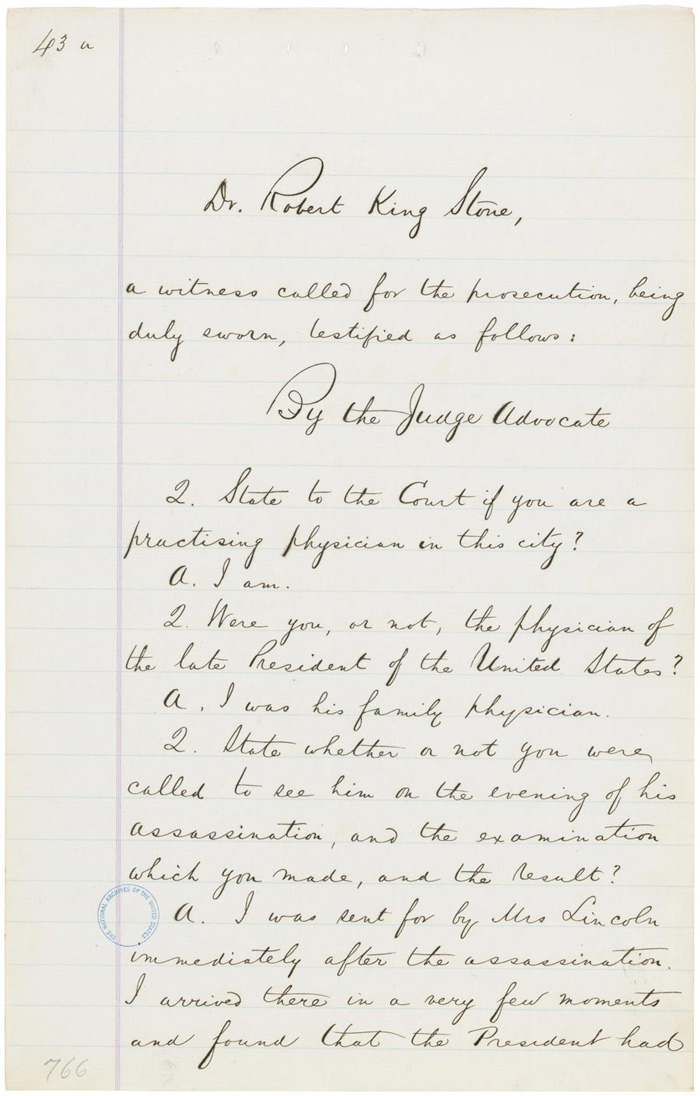
Dr. Robert King Stone was the Lincoln family doctor and one of 350 witnesses to give an account of the events of April 14, 1865. Dr. Stone recounts his experience with the dying Lincoln on the night of the assassination. Stone includes a description of Lincoln's fate and the care he received in his final hours.
-
Transcription
Dr. Robert King Stone,
a witness called for the prosecution, being duly sworn, testified as follows:
By the Judge Advocate
Q. State to the Court if you are a practicing physician in this city?
A. I am.
Q. Were you, or not, the physician of the late President of the United States?
A. I was his family physician.
Q. State whether or not you were called to see him on the evening of his assassination, and the examination which you made and the result?
A. I was sent for by Mrs Lincoln immediately after the assassination. I arrived there in a very few moments and found that the President had been removed form the theatre to the house of a gentleman living directly opposite the theatre, had been carried into the back room of the residence, and was there placed upon a bed. I found a number of gentlemen, citizens, around him, and among others two assistant surgeons of the army who had brought him over from the theatre and had attended to him. They immediately gave over the case to my care, knowing my relations to the family. I proceeded then to examine him, and instantly found that the President had received a gunshot wound in the back part of the left side of his head, into which I carried immediately my finger. I at once informed those around that the case was a hopeless one; that the President would die; that there was no positive limit to the duration of his life; that his vital tenacity was very strong, and he would resist as long as any man could, but that death certainly would soon close the scene. I remained with him doing whatever was in my power, assisted by my friends, to aid him, but of course, nothing could be done, and he died the next morning at about half past seven o'clock. It was about a quarter past ten that I reached him.
Q. He died from that wound?
A. Yes, sir.
Q. Did you extract the ball?
A. Yes, sir. The next day, previous to the process of embalmment, with some medical friends, Dr. Curtis and Dr. Woodward of the Army, and in the presence also of Surgeon General, Dr. Barnes, the examination was made. We traced the wound through the brain, and the ball was found in the anterior part of the same side of the brain, the left side, - a large ball resembling those balls which are shot from the pistol known as the Derringer; an unusually large ball; that is, a larger ball than those used in the ordinary pocket revolvers.
Q. Was is a leaden ball?
A. Yes, sir, a hand made ball, from which the tag on the little end had been cut by hand. The ball was flattened somewhat, impressed in its passage through the skull, and a portion had been cut off in going through the bone. I marked the ball with the initials of the late President, and sealed it in the presence of the Secretary of War in his office, - sealed it with my private seal and endorsed it with my name. The Secretary enclosed it in another envelope which he endorsed in like manner and sealed with his private seal. It is still in his custody, and he ordered it to be placed among the archive of his department.
Q. Was the ball slightly flattened?
A. Yes, sir.
Q. Did you see the pistol?
A. No, sir, I did not. I may state that I marked the ball with the initials of the President, "A, L", so that I could recognize it instantly.
Q. [Exhibiting a ball to the witness.] Look at that ball and tell the Court whether it is the one which you extracted from the head of the President?
A. It is. I recognize the mark I put upon it with my penknife, "A. L", and the shape of the ball. This is the fragment of which I spoke, which was cut off in its passage through the skull. The ball was flattened as I described it to the Court.
[The ball was offered in evidence without objection, and is marked Exhibit No. 30.]
Q. You know nothing in regard to the pistol?
A. No, sir, I never saw it. -
Source
U.S. National Archives, Records of the Office of the Judge Advocate General (Army)
-
Rights
This item is in the public domain and may be reproduced and used for any purpose, including research, teaching, private study, publication, broadcast or commercial use, with proper citation and attribution.
-
Tags
-
Cite this Item
National Archives. "Dr. Robert King Stone Testimony". Remembering Lincoln. Web. Accessed June 22, 2026. https://rememberinglincoln.fords.org/node/1196
-
Creator
National Archives
-
Date
May 16, 1865
from May. 16, 1865
Dr. Robert King Stone Testimony
-
Description
Dr. Robert King Stone was the Lincoln family doctor and one of 350 witnesses to give an account of the events of April 14, 1865. Dr. Stone recounts his experience with the dying Lincoln on the night of the assassination. Stone includes a description of Lincoln's fate and the care he received in his final hours.
-
Source
U.S. National Archives, Records of the Office of the Judge Advocate General (Army)
-
Rights
This item is in the public domain and may be reproduced and used for any purpose, including research, teaching, private study, publication, broadcast or commercial use, with proper citation and attribution.
-
Creator
National Archives
-
Date
May 16, 1865
from May. 20, 1865
President Lincoln's Funeral Service in Chicago, IL
-
Full Title
President Lincoln's Funeral Service in Chicago, IL - Frank Leslie's Illustrated Newspaper Drawing
-
Description
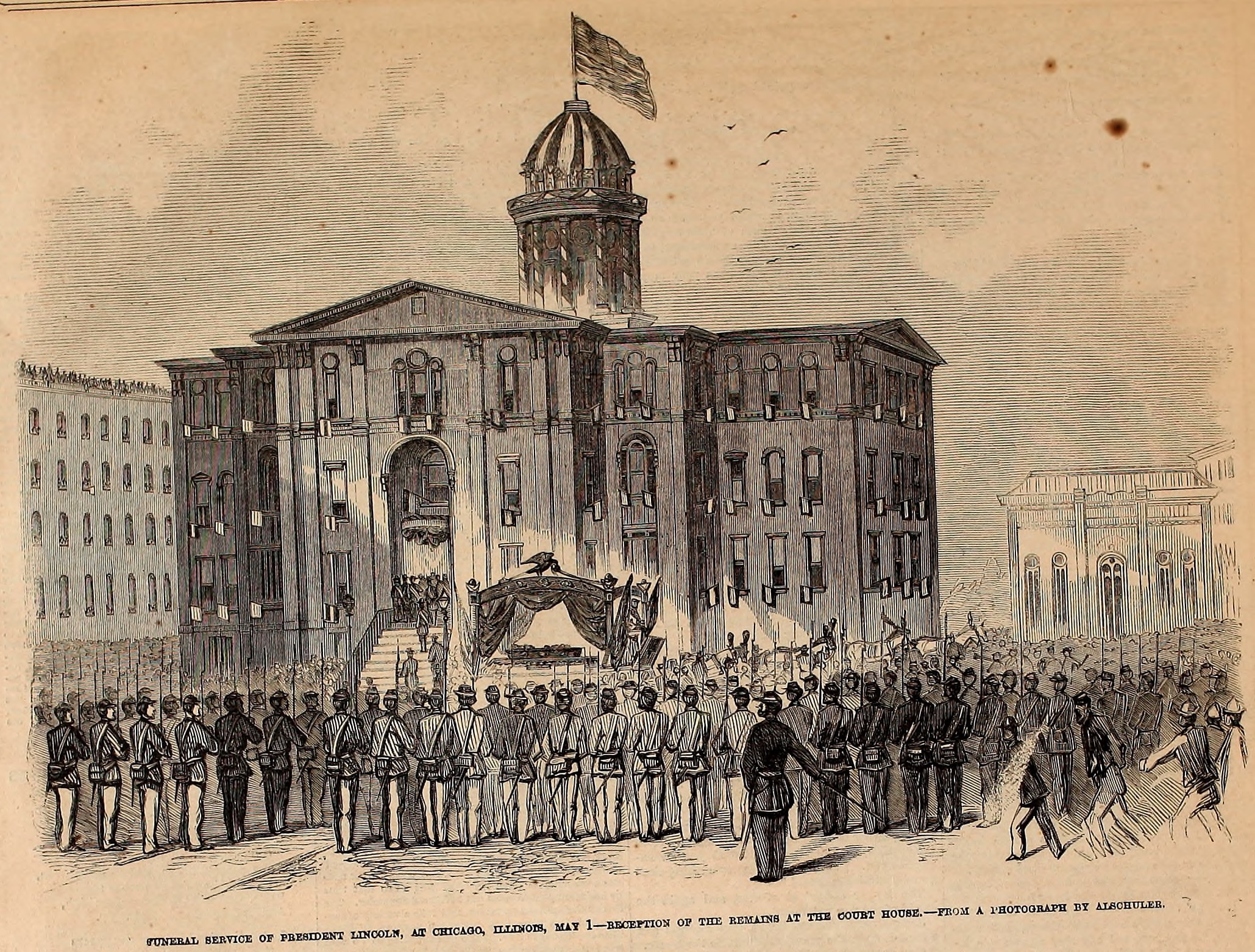
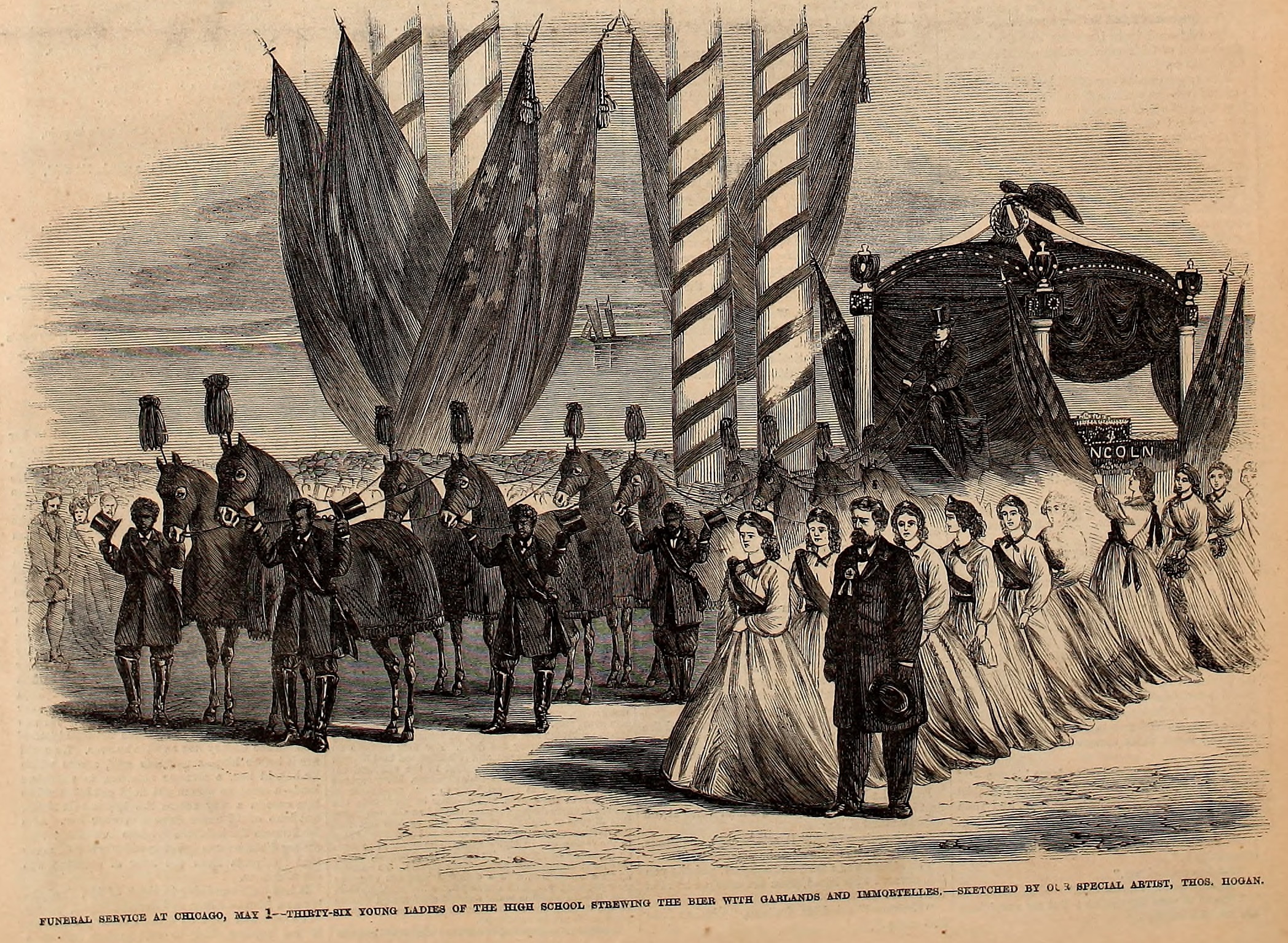
In the May 20th, 1865 edition of Frank Leslie's Illustrated Weekly newspaper, this image was printed next to an article about President Lincoln's funeral train heading to Springfield, Illinois for burial. The train carrying Lincoln’s body traveled through 180 cities and seven states on its way to Springfield. Scheduled stops for the special funeral train were published in newspapers. In ten cities, Lincoln’s casket was removed from the train for elaborate memorial services and public viewings. This image depicts the funeral procession for President Lincoln in Chicago. The illustrated literary and news publication was founded in 1855 and continued until 1922. It was one of several started by publisher and illustrator Frank Leslie. Leslie was a British engraver who came to the United States in 1848. The Illustrated Weekly followed a tested and proven formula of carefully combining elements of war, politics, art, science, travel and exploration, literature and the fine arts in each issue, enhanced with between 16 and 32 illustrations. By 1897 its circulation had grown to an estimated 65,000 copies.
-
Source
Lincoln Financial Foundation Collection
-
Rights
To request rights and permissions to use Lincoln Financial Foundation Collection images in research or publications, please download our image rights permission form: https://www.lincolncollection.org/access/image-rights-permissions/.
-
Tags
-
Cite this Item
Frank Leslie. "President Lincoln's Funeral Service in Chicago, IL - Frank Leslie's Illustrated Newspaper Drawing". Frank Leslie. Remembering Lincoln. Web. Accessed June 22, 2026. https://rememberinglincoln.fords.org/node/1117
-
Creator
Frank Leslie
-
Publisher
Frank Leslie
-
Date
May 20, 1865
from May. 20, 1865
President Lincoln's Funeral Service in Chicago, IL - Frank Leslie's Illustrated Newspaper Drawing
-
Description
In the May 20th, 1865 edition of Frank Leslie's Illustrated Weekly newspaper, this image was printed next to an article about President Lincoln's funeral train heading to Springfield, Illinois for burial. The train carrying Lincoln’s body traveled through 180 cities and seven states on its way to Springfield. Scheduled stops for the special funeral train were published in newspapers. In ten cities, Lincoln’s casket was removed from the train for elaborate memorial services and public viewings. This image depicts the funeral procession for President Lincoln in Chicago. The illustrated literary and news publication was founded in 1855 and continued until 1922. It was one of several started by publisher and illustrator Frank Leslie. Leslie was a British engraver who came to the United States in 1848. The Illustrated Weekly followed a tested and proven formula of carefully combining elements of war, politics, art, science, travel and exploration, literature and the fine arts in each issue, enhanced with between 16 and 32 illustrations. By 1897 its circulation had grown to an estimated 65,000 copies.
-
Source
Lincoln Financial Foundation Collection
-
Rights
To request rights and permissions to use Lincoln Financial Foundation Collection images in research or publications, please download our image rights permission form: https://www.lincolncollection.org/access/image-rights-permissions/.
-
Creator
Frank Leslie
-
Publisher
Frank Leslie
-
Date
May 20, 1865
from May. 13, 1865
President Lincoln's Funeral Train, Interior
-
Full Title
President Lincoln's Funeral Train, Interior - Frank Leslie's Illustrated Newspaper Drawing
-
Description
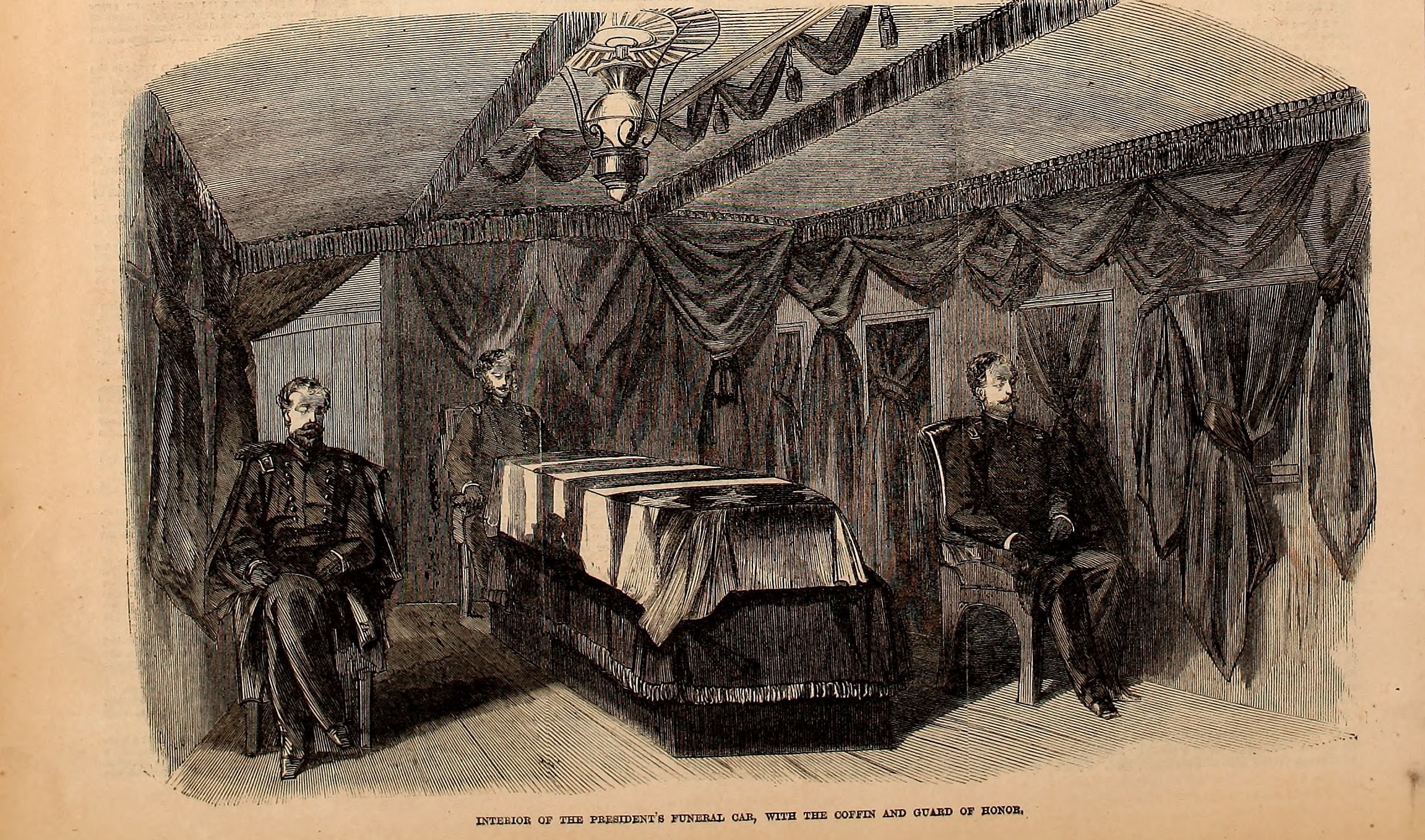
In the May 13th, 1865 edition of Frank Leslie's Illustrated Weekly newspaper, this image was printed next to an article about President Lincoln's funeral train heading to Springfield, Illinois for burial. The train carrying Lincoln’s body traveled through 180 cities and seven states on its way to Springfield. Scheduled stops for the special funeral train were published in newspapers. In ten cities, Lincoln’s casket was removed from the train for elaborate memorial services and public viewings. Millions of Americans came out to see the president and pay respects. The illustrated literary and news publication was founded in 1855 and continued until 1922. It was one of several started by publisher and illustrator Frank Leslie. Leslie was a British engraver who came to the United States in 1848. The Illustrated Weekly followed a tested and proven formula of carefully combining elements of war, politics, art, science, travel and exploration, literature and the fine arts in each issue, enhanced with between 16 and 32 illustrations. By 1897 its circulation had grown to an estimated 65,000 copies.
-
Source
Lincoln Financial Foundation Collection
-
Rights
To request rights and permissions to use Lincoln Financial Foundation Collection images in research or publications, please download our image rights permission form: https://www.lincolncollection.org/access/image-rights-permissions/.
-
Tags
-
Cite this Item
Frank Leslie . "President Lincoln's Funeral Train, Interior - Frank Leslie's Illustrated Newspaper Drawing". Frank Leslie. Remembering Lincoln. Web. Accessed June 22, 2026. https://rememberinglincoln.fords.org/node/1116
-
Creator
Frank Leslie
-
Publisher
Frank Leslie
-
Date
May 13, 1865
from May. 13, 1865
President Lincoln's Funeral Train, Interior - Frank Leslie's Illustrated Newspaper Drawing
-
Description
In the May 13th, 1865 edition of Frank Leslie's Illustrated Weekly newspaper, this image was printed next to an article about President Lincoln's funeral train heading to Springfield, Illinois for burial. The train carrying Lincoln’s body traveled through 180 cities and seven states on its way to Springfield. Scheduled stops for the special funeral train were published in newspapers. In ten cities, Lincoln’s casket was removed from the train for elaborate memorial services and public viewings. Millions of Americans came out to see the president and pay respects. The illustrated literary and news publication was founded in 1855 and continued until 1922. It was one of several started by publisher and illustrator Frank Leslie. Leslie was a British engraver who came to the United States in 1848. The Illustrated Weekly followed a tested and proven formula of carefully combining elements of war, politics, art, science, travel and exploration, literature and the fine arts in each issue, enhanced with between 16 and 32 illustrations. By 1897 its circulation had grown to an estimated 65,000 copies.
-
Source
Lincoln Financial Foundation Collection
-
Rights
To request rights and permissions to use Lincoln Financial Foundation Collection images in research or publications, please download our image rights permission form: https://www.lincolncollection.org/access/image-rights-permissions/.
-
Creator
Frank Leslie
-
Publisher
Frank Leslie
-
Date
May 13, 1865
from May. 20, 1865
President Lincoln's Funeral Service in Chicago, IL
-
Full Title
President Lincoln's Funeral Service in Chicago, IL - Frank Leslie's Illustrated Newspaper Drawing
-
Description
In the May 20th, 1865 edition of Frank Leslie's Illustrated Weekly newspaper, this image was printed next to an article about President Lincoln's funeral train heading to Springfield, Illinois for burial. The train carrying Lincoln’s body traveled through 180 cities and seven states on its way to Springfield. Scheduled stops for the special funeral train were published in newspapers. In ten cities, Lincoln’s casket was removed from the train for elaborate memorial services and public viewings. This image depicts the funeral procession for President Lincoln in Chicago. The illustrated literary and news publication was founded in 1855 and continued until 1922. It was one of several started by publisher and illustrator Frank Leslie. Leslie was a British engraver who came to the United States in 1848. The Illustrated Weekly followed a tested and proven formula of carefully combining elements of war, politics, art, science, travel and exploration, literature and the fine arts in each issue, enhanced with between 16 and 32 illustrations. By 1897 its circulation had grown to an estimated 65,000 copies.
-
Source
Lincoln Financial Foundation Collection
-
Rights
To request rights and permissions to use Lincoln Financial Foundation Collection images in research or publications, please download our image rights permission form: https://www.lincolncollection.org/access/image-rights-permissions/.
-
Tags
-
Cite this Item
Thomas Hogan. "President Lincoln's Funeral Service in Chicago, IL - Frank Leslie's Illustrated Newspaper Drawing". Frank Leslie. Remembering Lincoln. Web. Accessed June 22, 2026. https://rememberinglincoln.fords.org/node/1115
-
Creator
Thomas Hogan
-
Publisher
Frank Leslie
-
Date
May 20, 1865
from May. 20, 1865
President Lincoln's Funeral Service in Chicago, IL - Frank Leslie's Illustrated Newspaper Drawing
-
Description
In the May 20th, 1865 edition of Frank Leslie's Illustrated Weekly newspaper, this image was printed next to an article about President Lincoln's funeral train heading to Springfield, Illinois for burial. The train carrying Lincoln’s body traveled through 180 cities and seven states on its way to Springfield. Scheduled stops for the special funeral train were published in newspapers. In ten cities, Lincoln’s casket was removed from the train for elaborate memorial services and public viewings. This image depicts the funeral procession for President Lincoln in Chicago. The illustrated literary and news publication was founded in 1855 and continued until 1922. It was one of several started by publisher and illustrator Frank Leslie. Leslie was a British engraver who came to the United States in 1848. The Illustrated Weekly followed a tested and proven formula of carefully combining elements of war, politics, art, science, travel and exploration, literature and the fine arts in each issue, enhanced with between 16 and 32 illustrations. By 1897 its circulation had grown to an estimated 65,000 copies.
-
Source
Lincoln Financial Foundation Collection
-
Rights
To request rights and permissions to use Lincoln Financial Foundation Collection images in research or publications, please download our image rights permission form: https://www.lincolncollection.org/access/image-rights-permissions/.
-
Creator
Thomas Hogan
-
Publisher
Frank Leslie
-
Date
May 20, 1865
from May. 13, 1865
President Lincoln's Funeral Train on a Steamer
-
Full Title
President Lincoln's Funeral Train on a Steamer - Frank Leslie's Illustrated Newspaper Drawing
-
Description
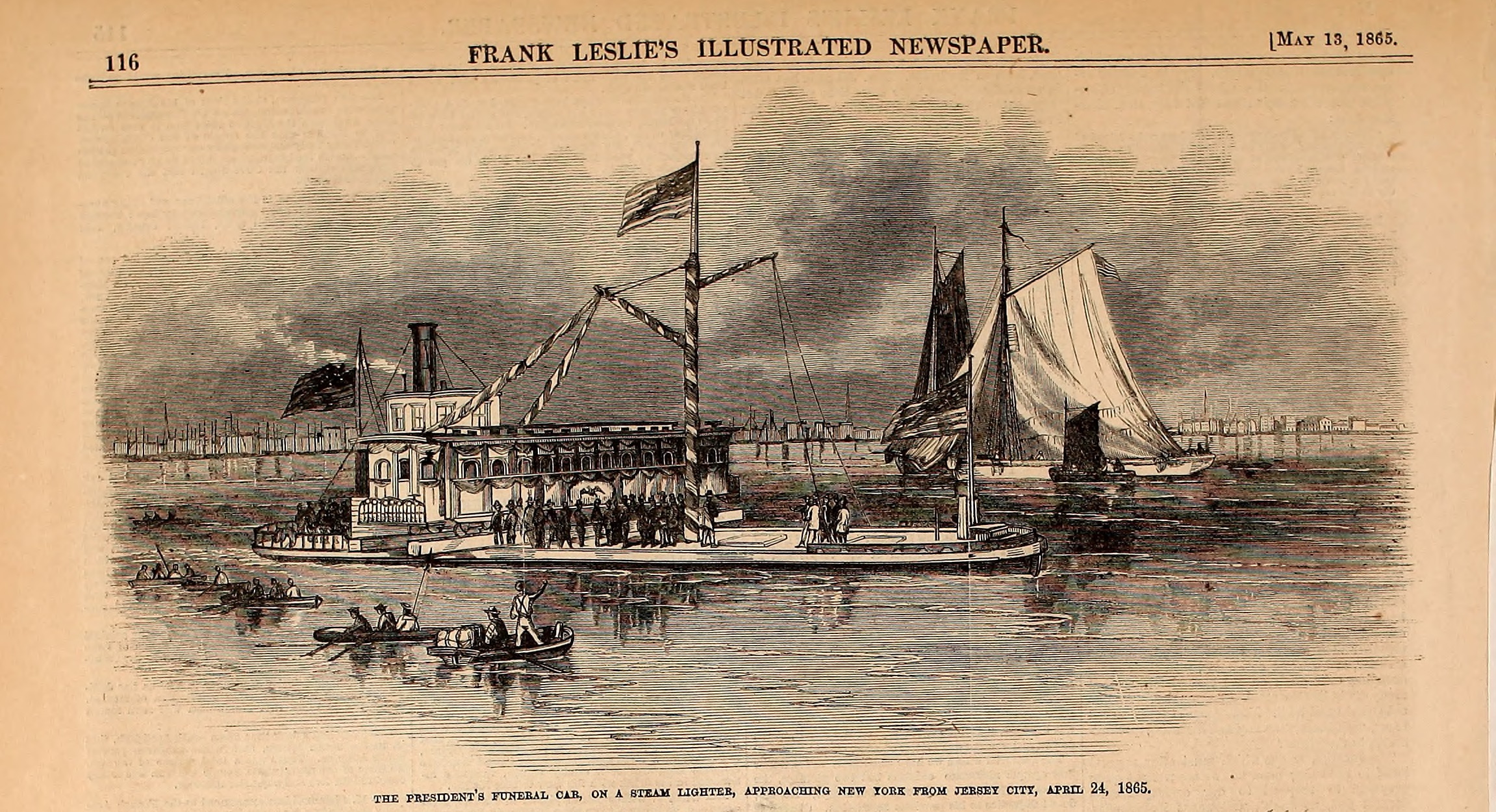
In the May 13th, 1865 edition of Frank Leslie's Illustrated Weekly newspaper, this image was printed next to an article about President Lincoln's funeral train heading to Springfield, Illinois for burial. The train carrying Lincoln’s body traveled through 180 cities and seven states on its way to Springfield. Scheduled stops for the special funeral train were published in newspapers. In ten cities, Lincoln’s casket was removed from the train for elaborate memorial services and public viewings. Millions of Americans came out to see the president and pay respects. The illustrated literary and news publication was founded in 1855 and continued until 1922. It was one of several started by publisher and illustrator Frank Leslie. Leslie was a British engraver who came to the United States in 1848. The Illustrated Weekly followed a tested and proven formula of carefully combining elements of war, politics, art, science, travel and exploration, literature and the fine arts in each issue, enhanced with between 16 and 32 illustrations. By 1897 its circulation had grown to an estimated 65,000 copies.
-
Source
Lincoln Financial Foundation Collection
-
Rights
To request rights and permissions to use Lincoln Financial Foundation Collection images in research or publications, please download our image rights permission form: https://www.lincolncollection.org/access/image-rights-permissions/.
-
Tags
-
Cite this Item
Frank Leslie. "President Lincoln's Funeral Train on a Steamer - Frank Leslie's Illustrated Newspaper Drawing". Frank Leslie. Remembering Lincoln. Web. Accessed June 22, 2026. https://rememberinglincoln.fords.org/node/1113
-
Creator
Frank Leslie
-
Publisher
Frank Leslie
-
Date
May 13, 1865
from May. 13, 1865
President Lincoln's Funeral Train on a Steamer - Frank Leslie's Illustrated Newspaper Drawing
-
Description
In the May 13th, 1865 edition of Frank Leslie's Illustrated Weekly newspaper, this image was printed next to an article about President Lincoln's funeral train heading to Springfield, Illinois for burial. The train carrying Lincoln’s body traveled through 180 cities and seven states on its way to Springfield. Scheduled stops for the special funeral train were published in newspapers. In ten cities, Lincoln’s casket was removed from the train for elaborate memorial services and public viewings. Millions of Americans came out to see the president and pay respects. The illustrated literary and news publication was founded in 1855 and continued until 1922. It was one of several started by publisher and illustrator Frank Leslie. Leslie was a British engraver who came to the United States in 1848. The Illustrated Weekly followed a tested and proven formula of carefully combining elements of war, politics, art, science, travel and exploration, literature and the fine arts in each issue, enhanced with between 16 and 32 illustrations. By 1897 its circulation had grown to an estimated 65,000 copies.
-
Source
Lincoln Financial Foundation Collection
-
Rights
To request rights and permissions to use Lincoln Financial Foundation Collection images in research or publications, please download our image rights permission form: https://www.lincolncollection.org/access/image-rights-permissions/.
-
Creator
Frank Leslie
-
Publisher
Frank Leslie
-
Date
May 13, 1865
from Jun. 10, 1865
The Funeral Catafalque at Springfield, Illinois
-
Full Title
The Funeral Catafalque at Springfield, Illinois - Frank Leslie's Illustrated Newspaper Drawing
-
Description
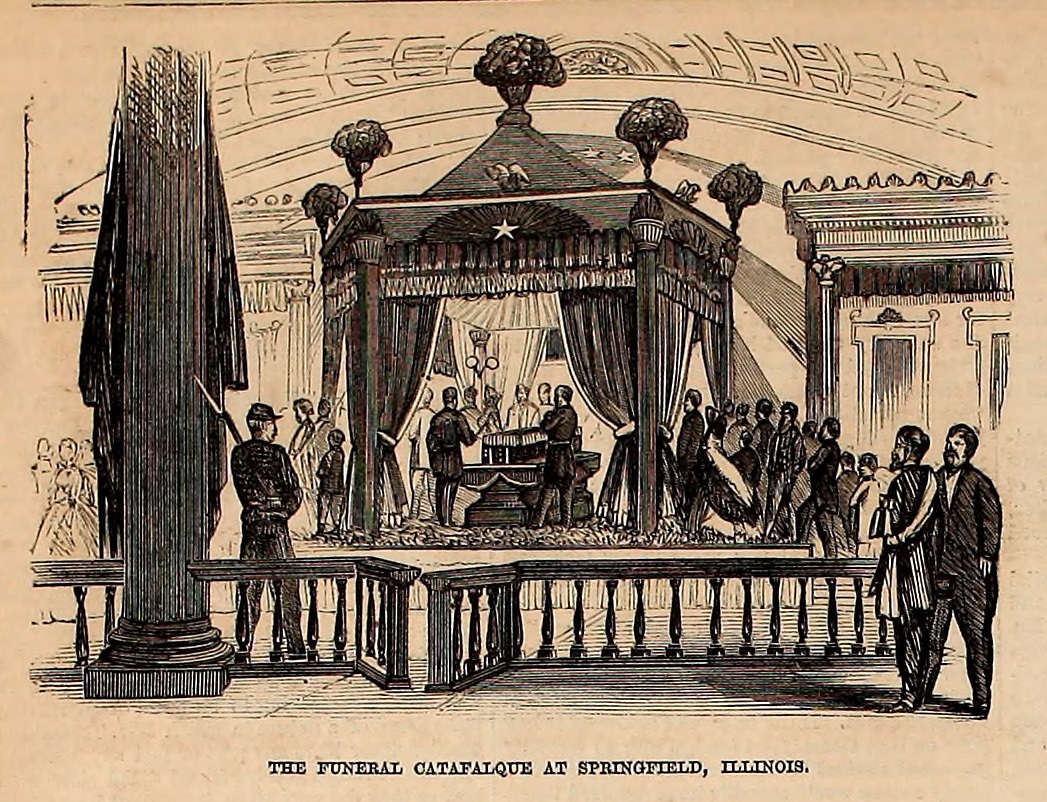
In the June 10th, 1865 edition of Frank Leslie's Illustrated Weekly newspaper, this image was printed next to an article about President Lincoln's funeral in Springfield, Illinois. It shows mourners visiting Lincoln's coffin before burial. President Lincoln was buried on May 4, 1865 at Oak Ridge Cemetery. The illustrated literary and news publication was founded in 1855 and continued until 1922. It was one of several started by publisher and illustrator Frank Leslie. Leslie was a British engraver who came to the United States in 1848. The Illustrated Weekly followed a tested and proven formula of carefully combining elements of war, politics, art, science, travel and exploration, literature and the fine arts in each issue, enhanced with between 16 and 32 illustrations. By 1897 its circulation had grown to an estimated 65,000 copies.
-
Source
Lincoln Financial Foundation Collection
-
Rights
To request rights and permissions to use Lincoln Financial Foundation Collection images in research or publications, please download our image rights permission form: https://www.lincolncollection.org/access/image-rights-permissions/.
-
Tags
-
Cite this Item
Thomas Hogan. "The Funeral Catafalque at Springfield, Illinois - Frank Leslie's Illustrated Newspaper Drawing". Frank Leslie. Remembering Lincoln. Web. Accessed June 22, 2026. https://rememberinglincoln.fords.org/node/1112
-
Creator
Thomas Hogan
-
Publisher
Frank Leslie
-
Date
June 10, 1865
from Jun. 10, 1865
The Funeral Catafalque at Springfield, Illinois - Frank Leslie's Illustrated Newspaper Drawing
-
Description
In the June 10th, 1865 edition of Frank Leslie's Illustrated Weekly newspaper, this image was printed next to an article about President Lincoln's funeral in Springfield, Illinois. It shows mourners visiting Lincoln's coffin before burial. President Lincoln was buried on May 4, 1865 at Oak Ridge Cemetery. The illustrated literary and news publication was founded in 1855 and continued until 1922. It was one of several started by publisher and illustrator Frank Leslie. Leslie was a British engraver who came to the United States in 1848. The Illustrated Weekly followed a tested and proven formula of carefully combining elements of war, politics, art, science, travel and exploration, literature and the fine arts in each issue, enhanced with between 16 and 32 illustrations. By 1897 its circulation had grown to an estimated 65,000 copies.
-
Source
Lincoln Financial Foundation Collection
-
Rights
To request rights and permissions to use Lincoln Financial Foundation Collection images in research or publications, please download our image rights permission form: https://www.lincolncollection.org/access/image-rights-permissions/.
-
Creator
Thomas Hogan
-
Publisher
Frank Leslie
-
Date
June 10, 1865
from May. 20, 1865
John Wilkes Booth "Buried at Sea"
-
Full Title
John Wilkes Booth "Buried at Sea" - Frank Leslie's Illustrated Newspaper Drawing
-
Description
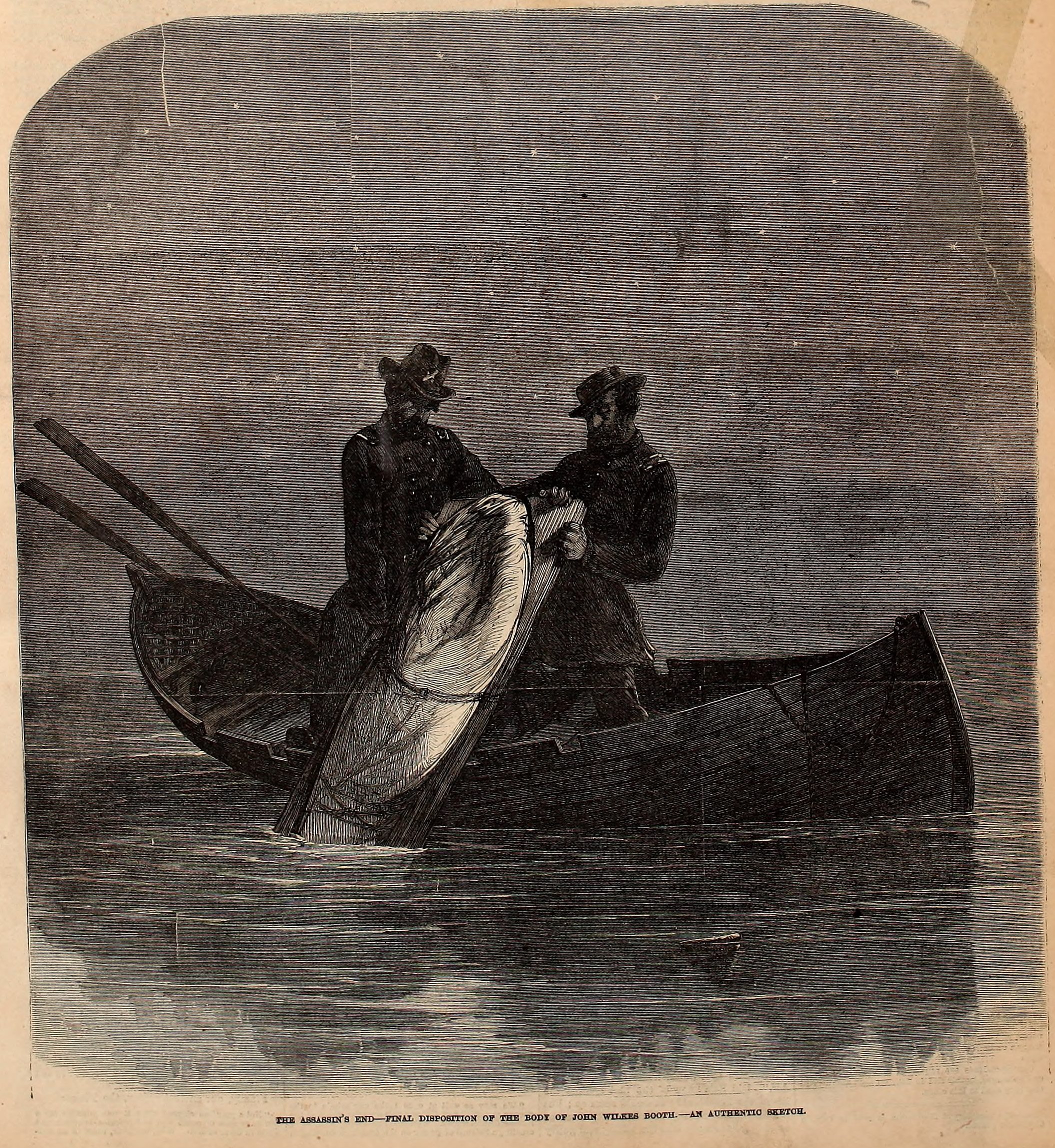
In the May 20th, 1865 edition of Frank Leslie's Illustrated Weekly newspaper, this image was printed inaccurately depicting the burial of President Lincoln's assassin, actor John Wilkes Booth. The federal government was worried what the public would do if they buried the body, so they staged a burial at sea and then secretly buried the assassin in an unmarked location. In 1869 they released the body to Booth's family and he was reburied in their family plot in Baltimore, Maryland. Frank Leslie's Illustrated Weekly was a literary and news publication founded in 1855 which ran until 1922. It was one of several started by publisher and illustrator Frank Leslie. Leslie was a British engraver who came to the United States in 1848. The Illustrated Weekly followed a tested and proven formula of carefully combining elements of war, politics, art, science, travel and exploration, literature and the fine arts in each issue, enhanced with between 16 and 32 illustrations. By 1897 its circulation had grown to an estimated 65,000 copies.
-
Source
The Lincoln Financial Foundation Collection
-
Rights
To request rights and permissions to use Lincoln Financial Foundation Collection images in research or publications, please download our image rights permission form: https://www.lincolncollection.org/access/image-rights-permissions/.
-
Tags
-
Cite this Item
Frank Leslie. "John Wilkes Booth "Buried at Sea" - Frank Leslie's Illustrated Newspaper Drawing". Frank Leslie . Remembering Lincoln. Web. Accessed June 22, 2026. https://rememberinglincoln.fords.org/node/1110
-
Creator
Frank Leslie
-
Publisher
Frank Leslie
-
Date
May 20, 1865
from May. 20, 1865
John Wilkes Booth "Buried at Sea" - Frank Leslie's Illustrated Newspaper Drawing
-
Description
In the May 20th, 1865 edition of Frank Leslie's Illustrated Weekly newspaper, this image was printed inaccurately depicting the burial of President Lincoln's assassin, actor John Wilkes Booth. The federal government was worried what the public would do if they buried the body, so they staged a burial at sea and then secretly buried the assassin in an unmarked location. In 1869 they released the body to Booth's family and he was reburied in their family plot in Baltimore, Maryland. Frank Leslie's Illustrated Weekly was a literary and news publication founded in 1855 which ran until 1922. It was one of several started by publisher and illustrator Frank Leslie. Leslie was a British engraver who came to the United States in 1848. The Illustrated Weekly followed a tested and proven formula of carefully combining elements of war, politics, art, science, travel and exploration, literature and the fine arts in each issue, enhanced with between 16 and 32 illustrations. By 1897 its circulation had grown to an estimated 65,000 copies.
-
Source
The Lincoln Financial Foundation Collection
-
Rights
To request rights and permissions to use Lincoln Financial Foundation Collection images in research or publications, please download our image rights permission form: https://www.lincolncollection.org/access/image-rights-permissions/.
-
Creator
Frank Leslie
-
Publisher
Frank Leslie
-
Date
May 20, 1865
from May. 13, 1865
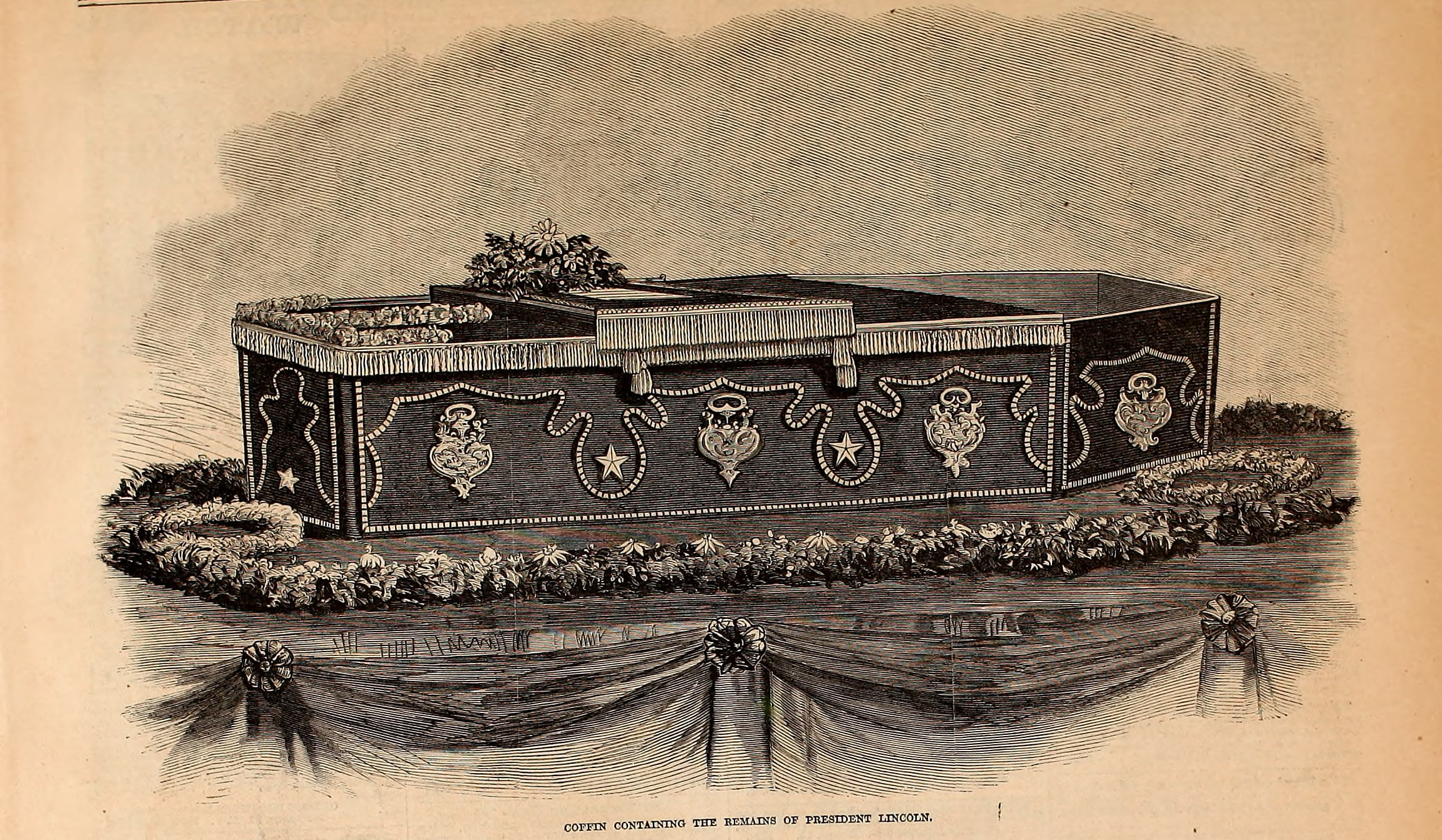
Abraham Lincoln's Coffin
-
Full Title
Abraham Lincoln's Coffin - Frank Leslie's Illustrated Newspaper Drawing
-
Description
In the May 13th, 1865 edition of Frank Leslie's Illustrated Weekly newspaper, this image was printed next to an article about President Lincoln's funeral. The illustrated literary and news publication was founded in 1855 and continued until 1922. It was one of several started by publisher and illustrator Frank Leslie. Leslie was a British engraver who came to the United States in 1848. The Illustrated Weekly followed a tested and proven formula of carefully combining elements of war, politics, art, science, travel and exploration, literature and the fine arts in each issue, enhanced with between 16 and 32 illustrations. By 1897 its circulation had grown to an estimated 65,000 copies.
-
Source
The Lincoln Financial Foundation Collection
-
Rights
To request rights and permissions to use Lincoln Financial Foundation Collection images in research or publications, please download our image rights permission form: https://www.lincolncollection.org/access/image-rights-permissions/.
-
Tags
-
Cite this Item
Frank Leslie. "Abraham Lincoln's Coffin - Frank Leslie's Illustrated Newspaper Drawing". Frank Leslie. Remembering Lincoln. Web. Accessed June 22, 2026. https://rememberinglincoln.fords.org/node/1109
-
Creator
Frank Leslie
-
Publisher
Frank Leslie
-
Date
May 13, 1865
from May. 13, 1865
Abraham Lincoln's Coffin - Frank Leslie's Illustrated Newspaper Drawing
-
Description
In the May 13th, 1865 edition of Frank Leslie's Illustrated Weekly newspaper, this image was printed next to an article about President Lincoln's funeral. The illustrated literary and news publication was founded in 1855 and continued until 1922. It was one of several started by publisher and illustrator Frank Leslie. Leslie was a British engraver who came to the United States in 1848. The Illustrated Weekly followed a tested and proven formula of carefully combining elements of war, politics, art, science, travel and exploration, literature and the fine arts in each issue, enhanced with between 16 and 32 illustrations. By 1897 its circulation had grown to an estimated 65,000 copies.
-
Source
The Lincoln Financial Foundation Collection
-
Rights
To request rights and permissions to use Lincoln Financial Foundation Collection images in research or publications, please download our image rights permission form: https://www.lincolncollection.org/access/image-rights-permissions/.
-
Creator
Frank Leslie
-
Publisher
Frank Leslie
-
Date
May 13, 1865
from May. 13, 1865
President Lincoln's funeral
-
Full Title
President Lincoln's funeral. [Harper's Weekly illustration.]
-
Description
This illustration from Harper's Weekly depicts the funeral procession of Abraham Lincoln in an issue published on May 13, 1865. Guided by Union Soldiers on all sides, Lincoln's body is processed through the crowded streets of New York City as onlookers gather to see their beloved President. In the center of the illustration, a balcony is adorned with a banner that reads "WITH MALICE TOWARD NONE, WITH CHARITY FOR ALL," referring to Lincoln's Second Inaugural Address on March 4, 1865.
-
Source
Library of Congress, Rare Book and Special Collections Division, Alfred Whital Stern Collection of Lincolniana.
-
Rights
This item is in the public domain and may be reproduced and used for any purpose, including research, teaching, private study, publication, broadcast or commercial use, with proper citation and attribution.
-
Tags
-
Cite this Item
Mathew Brady. "President Lincoln's funeral. [Harper's Weekly illustration.]". Harper's Weekly. Remembering Lincoln. Web. Accessed June 22, 2026. https://rememberinglincoln.fords.org/node/1104

-
Creator
Mathew Brady
-
Publisher
Harper's Weekly
-
Date
May 13, 1865
-
Material
newspaper
-
Dimensions
40.1 x 55.7 cm.
from May. 13, 1865
President Lincoln's funeral. [Harper's Weekly illustration.]
![President Lincoln's funeral. [Harper's Weekly illustration.]](https://rememberinglincoln.fords.org/sites/default/files/001r%5B1%5D.png)
-
Description
This illustration from Harper's Weekly depicts the funeral procession of Abraham Lincoln in an issue published on May 13, 1865. Guided by Union Soldiers on all sides, Lincoln's body is processed through the crowded streets of New York City as onlookers gather to see their beloved President. In the center of the illustration, a balcony is adorned with a banner that reads "WITH MALICE TOWARD NONE, WITH CHARITY FOR ALL," referring to Lincoln's Second Inaugural Address on March 4, 1865.
-
Source
Library of Congress, Rare Book and Special Collections Division, Alfred Whital Stern Collection of Lincolniana.
-
Rights
This item is in the public domain and may be reproduced and used for any purpose, including research, teaching, private study, publication, broadcast or commercial use, with proper citation and attribution.
-
Creator
Mathew Brady
-
Publisher
Harper's Weekly
-
Date
May 13, 1865
-
Material
newspaper
-
Dimensions
40.1 x 55.7 cm.