from Apr. 23, 1865
A Sermon, Occasioned by the Assassination of Abraham Lincoln, President of the United States
-
Full Title
A Sermon, Occasioned by the Assassination of Abraham Lincoln, President of the United States
-
Description
Sermon preached by Pliny H. White at Coventry, Vermont. Whine opens his remarks by addressing the severity of the loss of President Lincoln, the first president ever assassinated. He praises Lincoln for his personal virtues, public service, and personal magnetism. He also compares the death of Lincoln to other rulers in history and religious leaders like Moses, and what Scripture says on how to mourn such losses. Whine hopes that the sermon today will help pay respects to the fallen president, seek consolation and consider current duties in the face of turmoil. During the 19th century, it became popular to publish sermons in newspapers and magazines. Both the Union and the Confederacy reported increased religious fervor during the war. "Abraham Lincoln struggled personally with trying to understand the war in religious terms. Many, including Lincoln, came to see the war as a punishment for disunity and religious failures. A powerful theme of the sermons is the providence of God. Many people viewed Lincoln as a martyr, and often he was compared to Moses, Abraham, and George Washington. Lincoln's assassination took place on Good Friday, so most sermons about his death occurred that following Sunday at services." - The Martyred President, Emory University Libraries.
-
Transcription
Transcript available on The Martyred President: Sermons Given on the Occasion of the Assassination of Abraham Lincoln
-
Source
-
Rights
This item is in the public domain. As a service to other researchers, we request that users credit the Emory University Libraries as the source.
-
Tags
-
Cite this Item
Pliny H. White. "A Sermon, Occasioned by the Assassination of Abraham Lincoln, President of the United States". The Vermont Record Office. Remembering Lincoln. Web. Accessed April 5, 2026. https://rememberinglincoln.fords.org/node/992

-
Creator
Pliny H. White
-
Publisher
The Vermont Record Office
-
Date
April 23, 1865
from Apr. 23, 1865
A Sermon, Occasioned by the Assassination of Abraham Lincoln, President of the United States
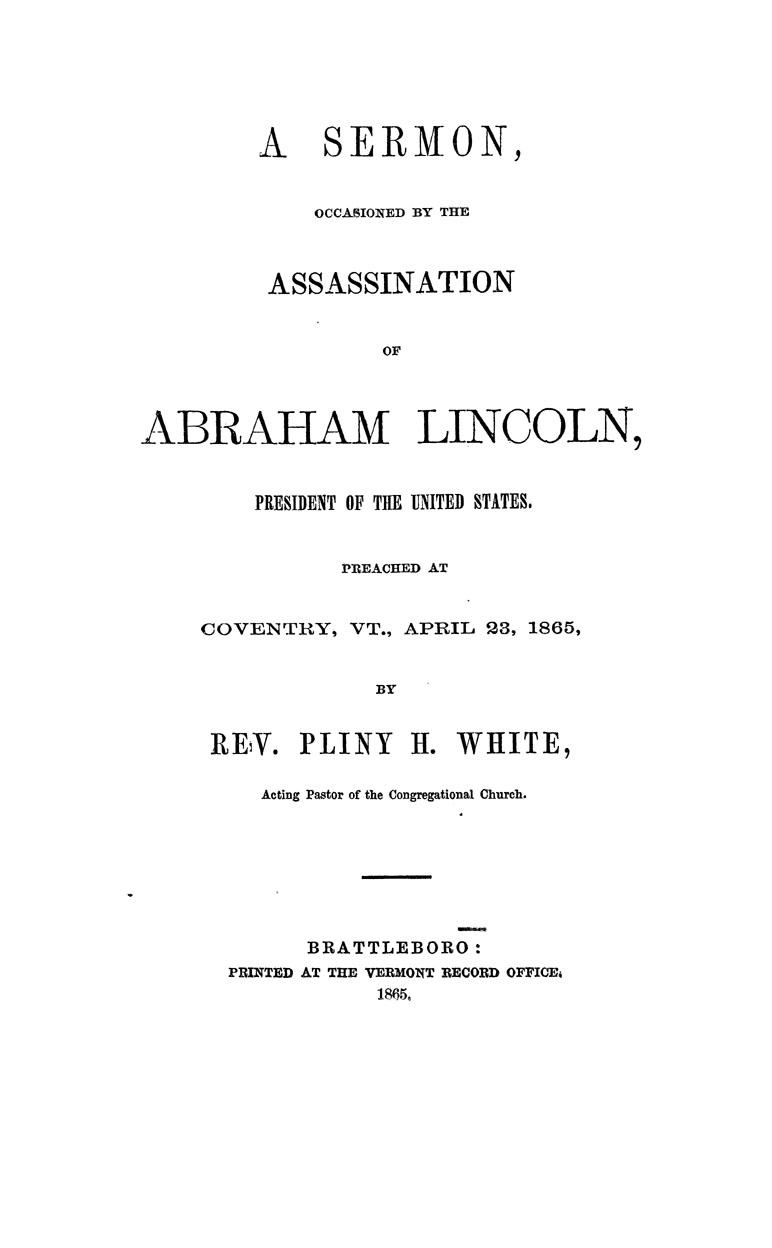
-
Description
Sermon preached by Pliny H. White at Coventry, Vermont. Whine opens his remarks by addressing the severity of the loss of President Lincoln, the first president ever assassinated. He praises Lincoln for his personal virtues, public service, and personal magnetism. He also compares the death of Lincoln to other rulers in history and religious leaders like Moses, and what Scripture says on how to mourn such losses. Whine hopes that the sermon today will help pay respects to the fallen president, seek consolation and consider current duties in the face of turmoil. During the 19th century, it became popular to publish sermons in newspapers and magazines. Both the Union and the Confederacy reported increased religious fervor during the war. "Abraham Lincoln struggled personally with trying to understand the war in religious terms. Many, including Lincoln, came to see the war as a punishment for disunity and religious failures. A powerful theme of the sermons is the providence of God. Many people viewed Lincoln as a martyr, and often he was compared to Moses, Abraham, and George Washington. Lincoln's assassination took place on Good Friday, so most sermons about his death occurred that following Sunday at services." - The Martyred President, Emory University Libraries.
-
Source
-
Rights
This item is in the public domain. As a service to other researchers, we request that users credit the Emory University Libraries as the source.
-
Creator
Pliny H. White
-
Publisher
The Vermont Record Office
-
Date
April 23, 1865
from May. 1, 1865
O Captain! My Captain!
-
Full Title
O Captain! My Captain!
-
Description
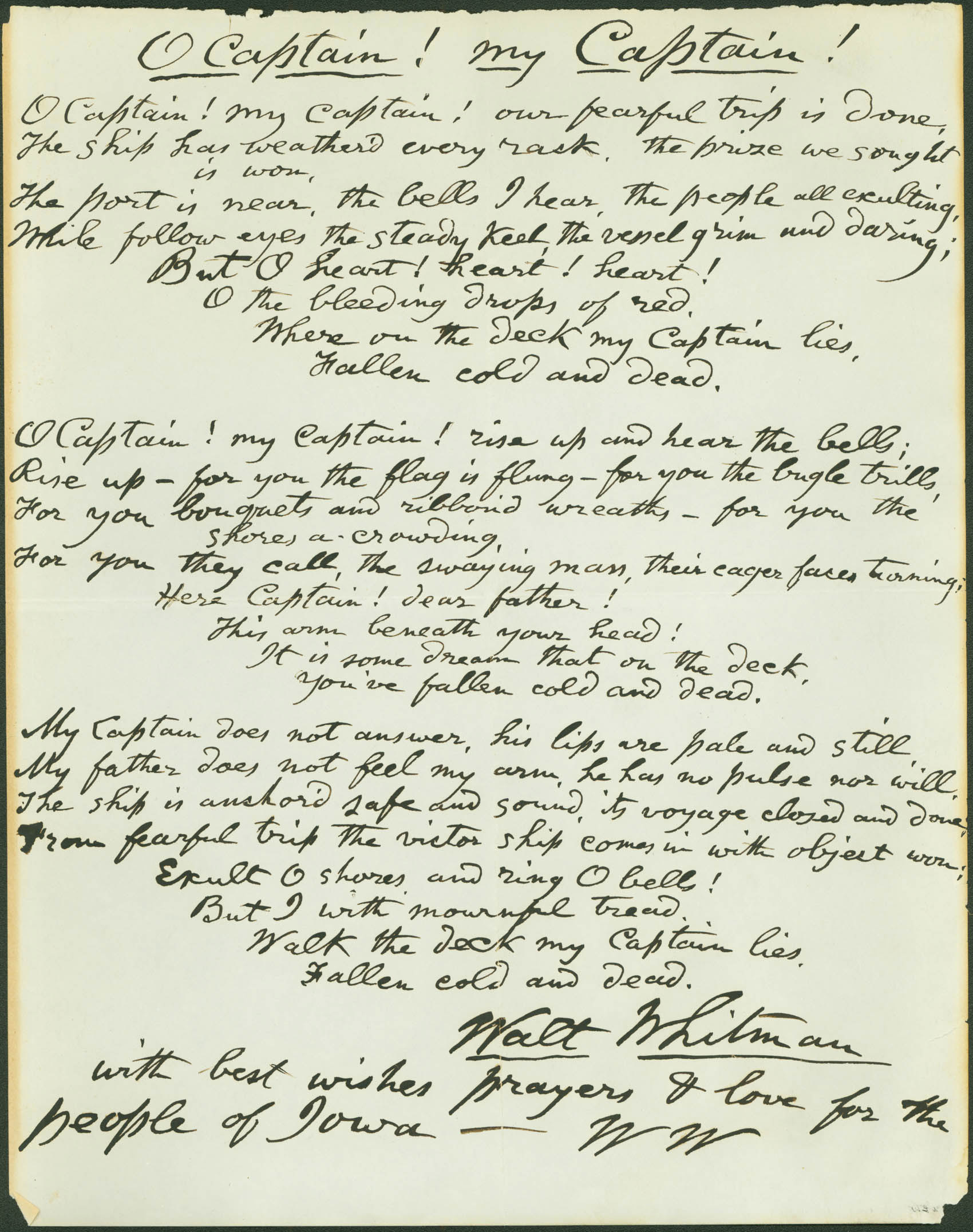
Autograph document signed by Walt Whitman, containing stanzas from “O Captain! My Captain!”, Whitman’s elegy to Lincoln. The poet submitted this document to Charles Aldrich for his collection of autographs, which he donated to the State of Iowa in 1884. Aldrich was the first curator of the State Historical Department of Iowa, now the State Historical Society of Iowa. Although Whitman composed the poem in 1865, the date of this autograph is unknown.
-
Transcription
O Captain! my Captain!
O Captain! my Captain! our fearful trip is done,
The ship has weather’d every rack, The prize we sought is won,
The port is near, the bells I hear, The people all exulting,
While follow eyes the steady keel, The venel grim and daring;
But O heart! heart! heart!
O the bleeding drops of red,
Where on the deck my Captain lies,
Fallen cold and dead.
O Captain! my Captain! rise up and hear the bells;
Rise up for you the flag is flung for you the bugle trills,
For you bouquets and ribbon’d wreaths for you the shores a crowding,
For you they call, The swaying man, Their eager faces turning;
Here Captain! dear father!
This arm beneath your head!
It is some dream that on the deck,
You’ve fallen cold and dead.
My Captain does not answer, his lips are pale and still,
My father does not feel my arm, he has no pulse nor will,
The ship is anchor’d safe and sound, its voyage closed and done;
From fearful trip the victor ship comes in with object won;
Exult O shores and ring O bells!
But I with mournful tread,
Walk the deck my Captain lies,
Fallen cold and dead.
Walt Whitman
with best wishes prayers & love for the people of Iowa - WW
[Transcription team:
Megan O., Laney R., Kiersten T., Alexis W.
New Hampton Middle School, New Hampton, Iowa] -
Source
Charles Aldrich Autograph Collection, State Historical Society of Iowa, Des Moines
-
Rights
Use of this item for research, teaching and private study is permitted with proper citation, and attribution. Reproduction of this item for publication, broadcast or commercial use requires written permission. for permission, please contact State Historical Society of Iowa.
-
Tags
-
Cite this Item
Whitman, Walt. "O Captain! My Captain!". Remembering Lincoln. Web. Accessed April 5, 2026. https://rememberinglincoln.fords.org/node/938
-
Creator
Whitman, Walt
-
Date
unknown
from May. 1, 1865
O Captain! My Captain!
-
Description
Autograph document signed by Walt Whitman, containing stanzas from “O Captain! My Captain!”, Whitman’s elegy to Lincoln. The poet submitted this document to Charles Aldrich for his collection of autographs, which he donated to the State of Iowa in 1884. Aldrich was the first curator of the State Historical Department of Iowa, now the State Historical Society of Iowa. Although Whitman composed the poem in 1865, the date of this autograph is unknown.
-
Source
Charles Aldrich Autograph Collection, State Historical Society of Iowa, Des Moines
-
Rights
Use of this item for research, teaching and private study is permitted with proper citation, and attribution. Reproduction of this item for publication, broadcast or commercial use requires written permission. for permission, please contact State Historical Society of Iowa.
-
Creator
Whitman, Walt
-
Date
May 1, 1865
from Apr. 15, 1865
“The Great Crime in Washington- Proclamation by the Mayor”
-
Full Title
“The Great Crime in Washington- Proclamation by the Mayor”
-
Description
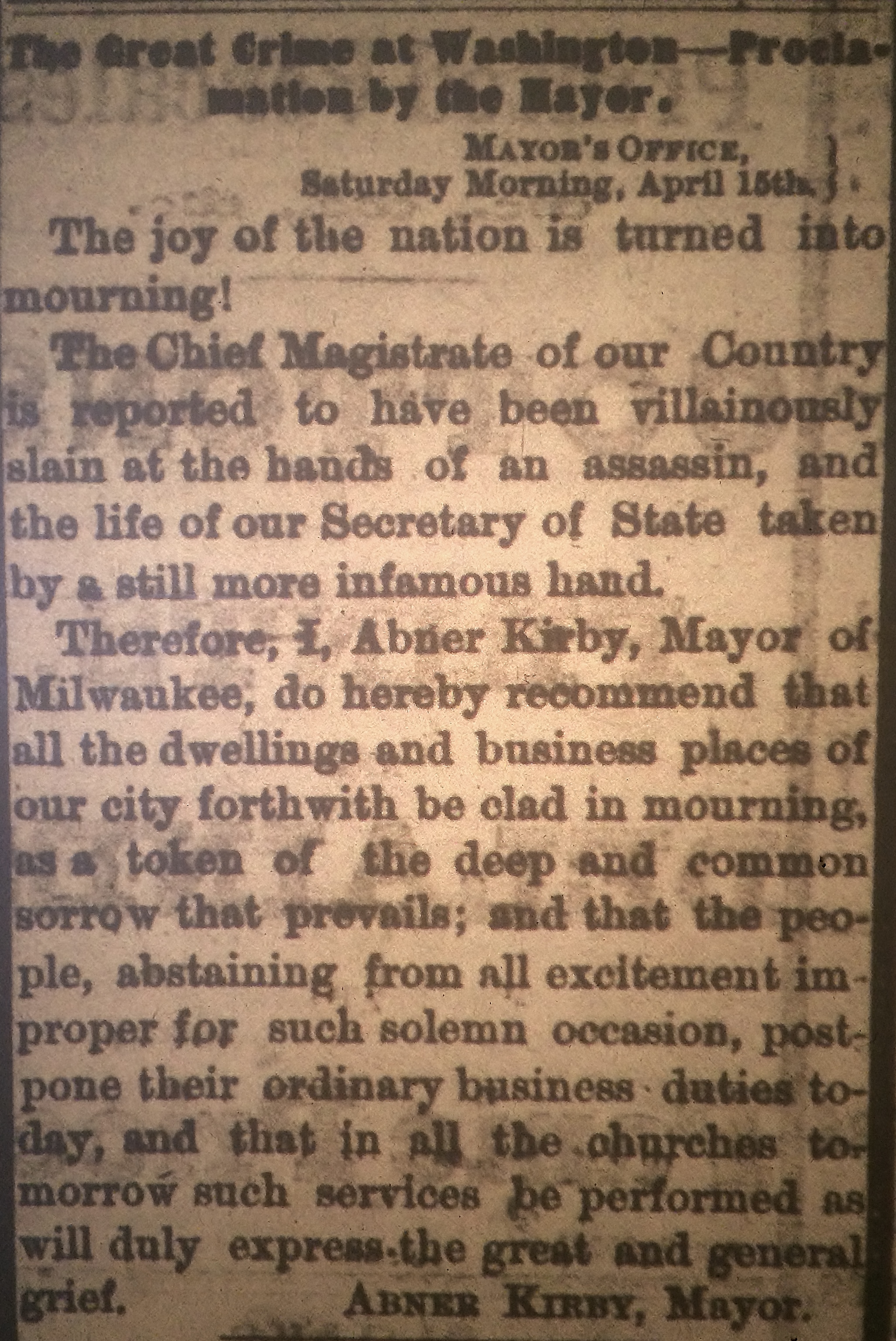
Editorial published in the Daily Wisconsin News on April 15, 1865, discussing the recommended stopping of all city activities by Major of Milwaukee, Abner Kirby. His proclamation states that “all the dwellings and business places of our city forthwith be clad with mourning, as a token of the deep and common sorrow that prevails...”
-
Transcription
The Great Crime at Washington-- Proclamation by the Mayor.
MAYOR’S OFFICE,
Saturday Morning, April 15th
The joy of the nation is turned to mourning! The Chief Magistrate of our Country is reported to have been villainously slain at the hands of an assassin, and the life of our Secretary of State taken by a still more infamous hand.
Therefore, I, Abner Kirby, Mayor of Milwaukee, do hereby recommend that all the dwellings and business places of our city forthwith be clad in mourning, as a token of the deep and common sorrow that prevails; and that the people, abstaining from all excitement improper for such solemn occasion, postpone their ordinary business duties today, and that in all the churches tomorrow such services be performed as will duly express the great and general grief.
Abner Kirby, Mayor.
[Transcription by: Kyra S., Dr. Susan Corbesero’s Class, Ellis School, Pittsburgh, Pennsylvania] -
Source
Milwaukee Public Library
-
Rights
This item is in the public domain and may be reproduced and used for any purpose, including research, teaching, private study, publication, broadcast or commercial use, with proper citation and attribution.
-
Tags
-
Cite this Item
Daily Wisconsin News. "“The Great Crime in Washington- Proclamation by the Mayor”". Remembering Lincoln. Web. Accessed April 5, 2026. https://rememberinglincoln.fords.org/node/917

-
Creator
Daily Wisconsin News
-
Date
April 15, 1865
from Apr. 15, 1865
“The Great Crime in Washington- Proclamation by the Mayor”
-
Description
Editorial published in the Daily Wisconsin News on April 15, 1865, discussing the recommended stopping of all city activities by Major of Milwaukee, Abner Kirby. His proclamation states that “all the dwellings and business places of our city forthwith be clad with mourning, as a token of the deep and common sorrow that prevails...”
-
Source
Milwaukee Public Library
-
Rights
This item is in the public domain and may be reproduced and used for any purpose, including research, teaching, private study, publication, broadcast or commercial use, with proper citation and attribution.
-
Creator
Daily Wisconsin News
-
Date
April 15, 1865
from Nov. 16, 2015
Casket Broadcloth Fragment
-
Full Title
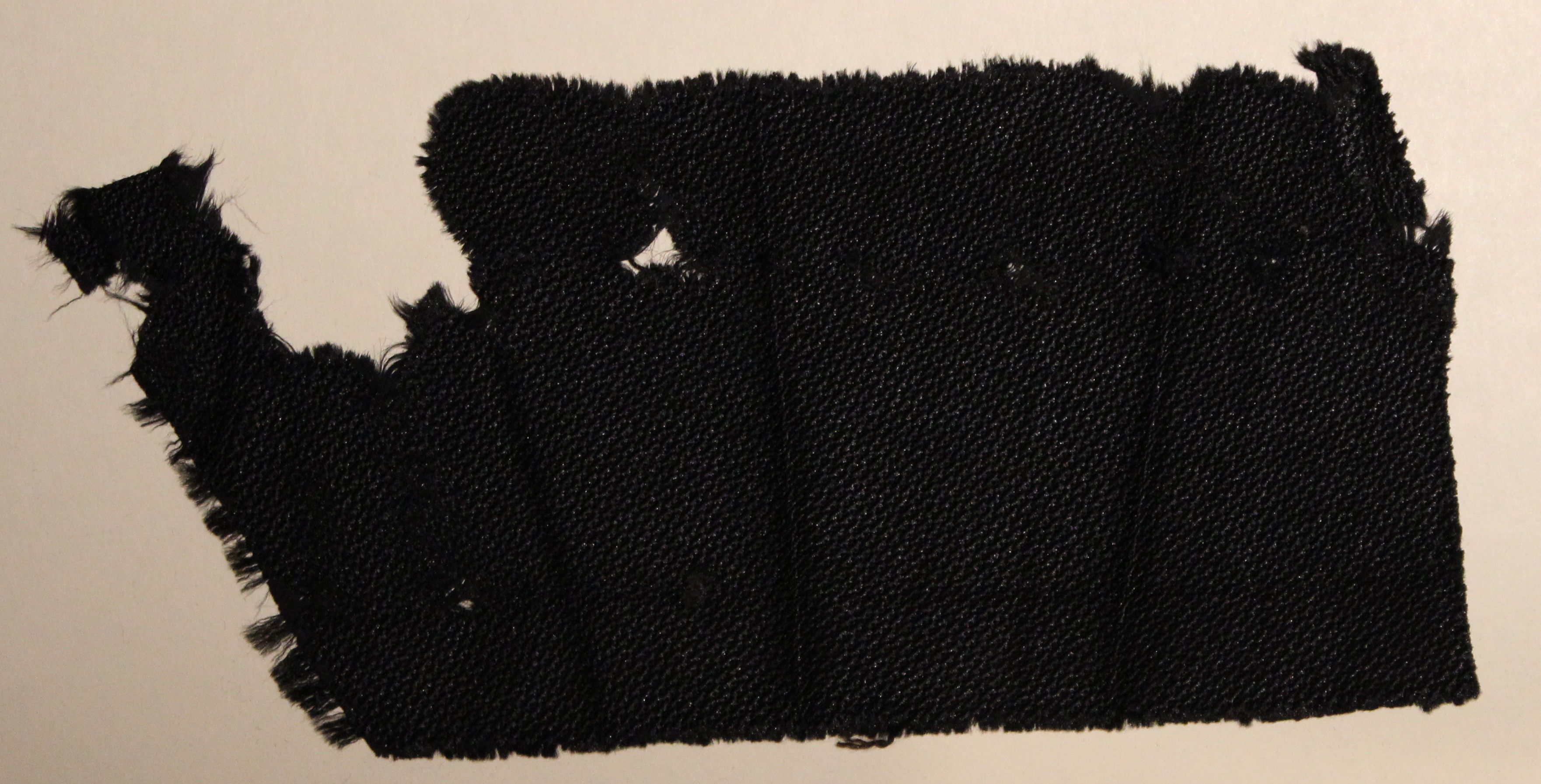
Broadcloth Fragment from Lincoln's Casket Covering
-
Description
This cloth fragment may have been cut from the black broadcloth that covered President Lincoln's casket during the funeral procession through Philadelphia in 1865. The train carrying Lincoln's body arrived in Philadelphia on April 22 and the body was open for public viewing at Independence Hall on April 23.
-
Source
The Abraham Lincoln Foundation of The Union League of Philadelphia (Object ID: 2001.34.1)
-
Rights
Use of this item for research, teaching and private study is permitted with proper citation and attribution, as “Courtesy of The Abraham Lincoln Foundation of The Union League of Philadelphia.” Reproduction of this item for publication, broadcast or commercial use requires written permission. For permission, please contact The Abraham Lincoln Foundation.
-
Tags
-
Cite this Item
Unknown. "Broadcloth Fragment from Lincoln's Casket Covering". Remembering Lincoln. Web. Accessed April 5, 2026. https://rememberinglincoln.fords.org/node/915

-
Creator
Unknown
-
Date
April 22-23 1865
-
Material
Cloth
-
Dimensions
5.0 x 8.0
from Nov. 16, 2015
Broadcloth Fragment from Lincoln's Casket Covering
-
Description
This cloth fragment may have been cut from the black broadcloth that covered President Lincoln's casket during the funeral procession through Philadelphia in 1865. The train carrying Lincoln's body arrived in Philadelphia on April 22 and the body was open for public viewing at Independence Hall on April 23.
-
Source
The Abraham Lincoln Foundation of The Union League of Philadelphia (Object ID: 2001.34.1)
-
Rights
Use of this item for research, teaching and private study is permitted with proper citation and attribution, as “Courtesy of The Abraham Lincoln Foundation of The Union League of Philadelphia.” Reproduction of this item for publication, broadcast or commercial use requires written permission. For permission, please contact The Abraham Lincoln Foundation.
-
Creator
Unknown
-
Date
November 16, 2015
-
Material
Cloth
-
Dimensions
5.0 x 8.0
from Nov. 16, 2015
Flower from Lincoln's Tomb
-
Full Title
Dried Flower From Lincoln's Tomb
-
Description
This pressed flower was taken from President Lincoln's tomb in Springfield, Illinois. Text written on the envelope included with the flower reads: "FLOWERS OFF THE TOMB OF ABRAHAM LINCOLN APRIL 1865."
-
Source
The Abraham Lincoln Foundation of The Union League of Philadelphia (Object ID: 2002.10.1)
-
Rights
Use of this item for research, teaching and private study is permitted with proper citation and attribution, as “Courtesy of The Abraham Lincoln Foundation of The Union League of Philadelphia.” Reproduction of this item for publication, broadcast or commercial use requires written permission. For permission, please contact The Abraham Lincoln Foundation.
-
Tags
-
Cite this Item
Unknown. "Dried Flower From Lincoln's Tomb". Remembering Lincoln. Web. Accessed April 5, 2026. https://rememberinglincoln.fords.org/node/914
-
Creator
Unknown
-
Date
April 22-23 1865
-
Dimensions
5.25 x 1.0
from Nov. 16, 2015
Dried Flower From Lincoln's Tomb
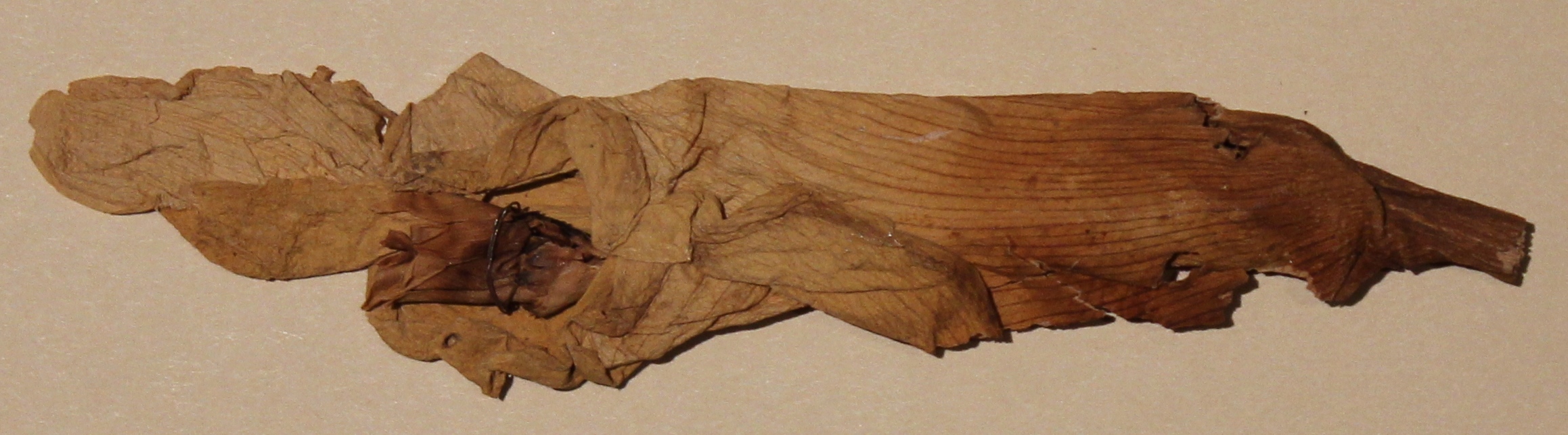
-
Description
This pressed flower was taken from President Lincoln's tomb in Springfield, Illinois. Text written on the envelope included with the flower reads: "FLOWERS OFF THE TOMB OF ABRAHAM LINCOLN APRIL 1865."
-
Source
The Abraham Lincoln Foundation of The Union League of Philadelphia (Object ID: 2002.10.1)
-
Rights
Use of this item for research, teaching and private study is permitted with proper citation and attribution, as “Courtesy of The Abraham Lincoln Foundation of The Union League of Philadelphia.” Reproduction of this item for publication, broadcast or commercial use requires written permission. For permission, please contact The Abraham Lincoln Foundation.
-
Creator
Unknown
-
Date
November 16, 2015
-
Dimensions
5.25 x 1.0
from Nov. 16, 2015
Potter Union League Mouring Ribbon
-
Full Title
Alfred R. Potter Union League Mouring Ribbon
-
Description
After Lincoln’s assassination, the Union League of Philadelphia issued mourning ribbons for its members to wear and grieve the fallen President. The ribbons were worn during Lincoln’s funeral procession in Philadelphia, where the President’s body was open for public viewing at Independence Hall. This ribbon is a blue, white, and red silk ribbon with metal “U” and “L” letters and a black gauze flower in the center. A black button is attached to the back. This ribbon was worn by Union League member Alfred R. Potter.
-
Source
The Abraham Lincoln Foundation of The Union League of Philadelphia (Object ID: 1968.1.1)
-
Rights
Use of this item for research, teaching and private study is permitted with proper citation and attribution, as “Courtesy of The Abraham Lincoln Foundation of The Union League of Philadelphia.” Reproduction of this item for publication, broadcast or commercial use requires written permission. For permission, please contact The Abraham Lincoln Foundation.
-
Tags
-
Cite this Item
The Union League of Philadelphia. "Alfred R. Potter Union League Mouring Ribbon". Remembering Lincoln. Web. Accessed April 5, 2026. https://rememberinglincoln.fords.org/node/913
-
Creator
The Union League of Philadelphia
-
Date
April 22-23 1865
-
Material
Silk, metal, gauze
-
Dimensions
3.5 x 1.0
from Nov. 16, 2015
Alfred R. Potter Union League Mouring Ribbon
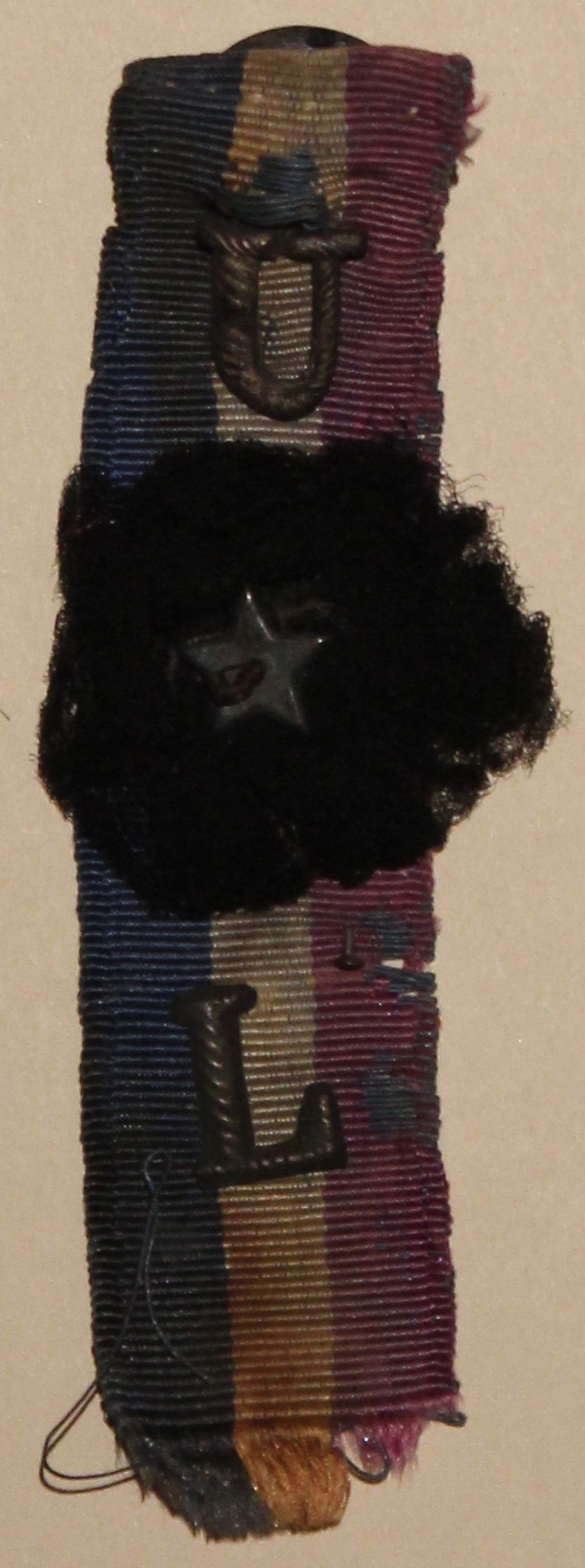
-
Description
After Lincoln’s assassination, the Union League of Philadelphia issued mourning ribbons for its members to wear and grieve the fallen President. The ribbons were worn during Lincoln’s funeral procession in Philadelphia, where the President’s body was open for public viewing at Independence Hall. This ribbon is a blue, white, and red silk ribbon with metal “U” and “L” letters and a black gauze flower in the center. A black button is attached to the back. This ribbon was worn by Union League member Alfred R. Potter.
-
Source
The Abraham Lincoln Foundation of The Union League of Philadelphia (Object ID: 1968.1.1)
-
Rights
Use of this item for research, teaching and private study is permitted with proper citation and attribution, as “Courtesy of The Abraham Lincoln Foundation of The Union League of Philadelphia.” Reproduction of this item for publication, broadcast or commercial use requires written permission. For permission, please contact The Abraham Lincoln Foundation.
-
Creator
The Union League of Philadelphia
-
Date
November 16, 2015
-
Material
Silk, metal, gauze
-
Dimensions
3.5 x 1.0
from Nov. 16, 2015
Ralston Mourning Ribbon
-
Full Title
Lewis Ralston Union League Mourning Ribbon
-
Description
After Lincoln’s assassination, the Union League of Philadelphia issued mourning ribbons for its members to wear and grieve the fallen President. The ribbons were worn during Lincoln’s funeral procession in Philadelphia, where the President’s body was open for public viewing at Independence Hall on April 23, 1865. The ribbon is a blue, white, and red silk ribbon with metal “U” and “L” letters and a black gauze flower in the center. This ribbon was worn by Union League member Lewis Ralston.
-
Source
The Abraham Lincoln Foundation of The Union League of Philadelphia (Object ID: 2014.108.1)
-
Rights
Use of this item for research, teaching and private study is permitted with proper citation and attribution, as “Courtesy of The Abraham Lincoln Foundation of The Union League of Philadelphia.” Reproduction of this item for publication, broadcast or commercial use requires written permission. For permission, please contact The Abraham Lincoln Foundation.
-
Tags
-
Cite this Item
The Union League of Philadelphia. "Lewis Ralston Union League Mourning Ribbon". Remembering Lincoln. Web. Accessed April 5, 2026. https://rememberinglincoln.fords.org/node/912
-
Creator
The Union League of Philadelphia
-
Date
April 22-23 1865
-
Material
Silk, metal, gauze
-
Dimensions
3.625 x 1.0
from Nov. 16, 2015
Lewis Ralston Union League Mourning Ribbon
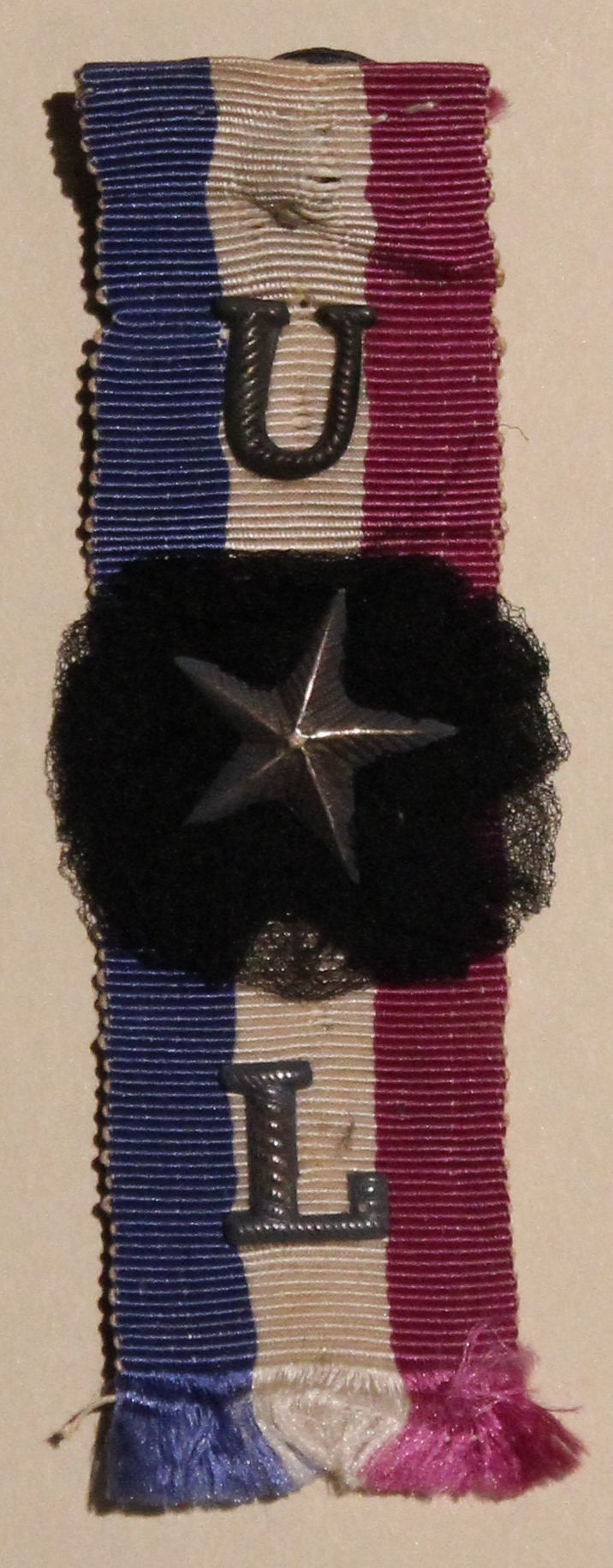
-
Description
After Lincoln’s assassination, the Union League of Philadelphia issued mourning ribbons for its members to wear and grieve the fallen President. The ribbons were worn during Lincoln’s funeral procession in Philadelphia, where the President’s body was open for public viewing at Independence Hall on April 23, 1865. The ribbon is a blue, white, and red silk ribbon with metal “U” and “L” letters and a black gauze flower in the center. This ribbon was worn by Union League member Lewis Ralston.
-
Source
The Abraham Lincoln Foundation of The Union League of Philadelphia (Object ID: 2014.108.1)
-
Rights
Use of this item for research, teaching and private study is permitted with proper citation and attribution, as “Courtesy of The Abraham Lincoln Foundation of The Union League of Philadelphia.” Reproduction of this item for publication, broadcast or commercial use requires written permission. For permission, please contact The Abraham Lincoln Foundation.
-
Creator
The Union League of Philadelphia
-
Date
November 16, 2015
-
Material
Silk, metal, gauze
-
Dimensions
3.625 x 1.0
from Nov. 16, 2015
"We Mourn a Father Slain"
-
Full Title
"We Mourn a Father Slain" Mourning Ribbon
-
Description
This mourning ribbon, owned by Union League member John C. Browne, was worn during President Lincoln's funeral procession in Philadelphia on April 22-23, 1865. The white silk ribbon includes a printed oval picture of Lincoln. Notice the incorrect birth year listed on the ribbon.
-
Transcription
WE MOURN
Abraham Lincoln,
Born February 12, 1808 Died April 15, 1865
A FATHER SLAIN.
-
Source
The Abraham Lincoln Foundation of The Union League of Philadelphia (Object ID: 2008.22.3)
-
Rights
Use of this item for research, teaching and private study is permitted with proper citation and attribution, as “Courtesy of The Abraham Lincoln Foundation of The Union League of Philadelphia.” Reproduction of this item for publication, broadcast or commercial use requires written permission. For permission, please contact The Abraham Lincoln Foundation.
-
Tags
-
Cite this Item
Unknown. ""We Mourn a Father Slain" Mourning Ribbon". Remembering Lincoln. Web. Accessed April 5, 2026. https://rememberinglincoln.fords.org/node/911
-
Creator
Unknown
-
Date
April 22-23 1865
-
Material
Silk
-
Dimensions
8.5 x 3.5
from Nov. 16, 2015
"We Mourn a Father Slain" Mourning Ribbon
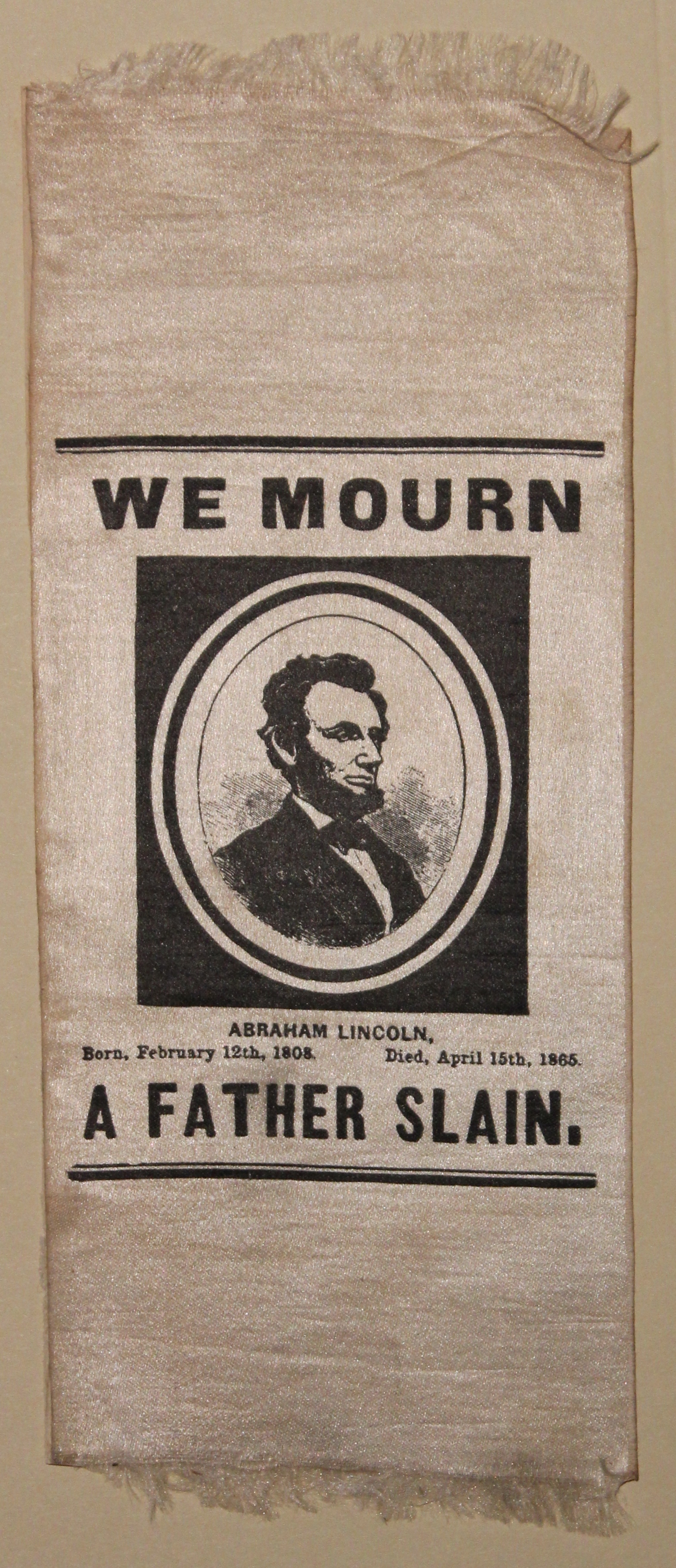
-
Description
This mourning ribbon, owned by Union League member John C. Browne, was worn during President Lincoln's funeral procession in Philadelphia on April 22-23, 1865. The white silk ribbon includes a printed oval picture of Lincoln. Notice the incorrect birth year listed on the ribbon.
-
Source
The Abraham Lincoln Foundation of The Union League of Philadelphia (Object ID: 2008.22.3)
-
Rights
Use of this item for research, teaching and private study is permitted with proper citation and attribution, as “Courtesy of The Abraham Lincoln Foundation of The Union League of Philadelphia.” Reproduction of this item for publication, broadcast or commercial use requires written permission. For permission, please contact The Abraham Lincoln Foundation.
-
Creator
Unknown
-
Date
November 16, 2015
-
Material
Silk
-
Dimensions
8.5 x 3.5